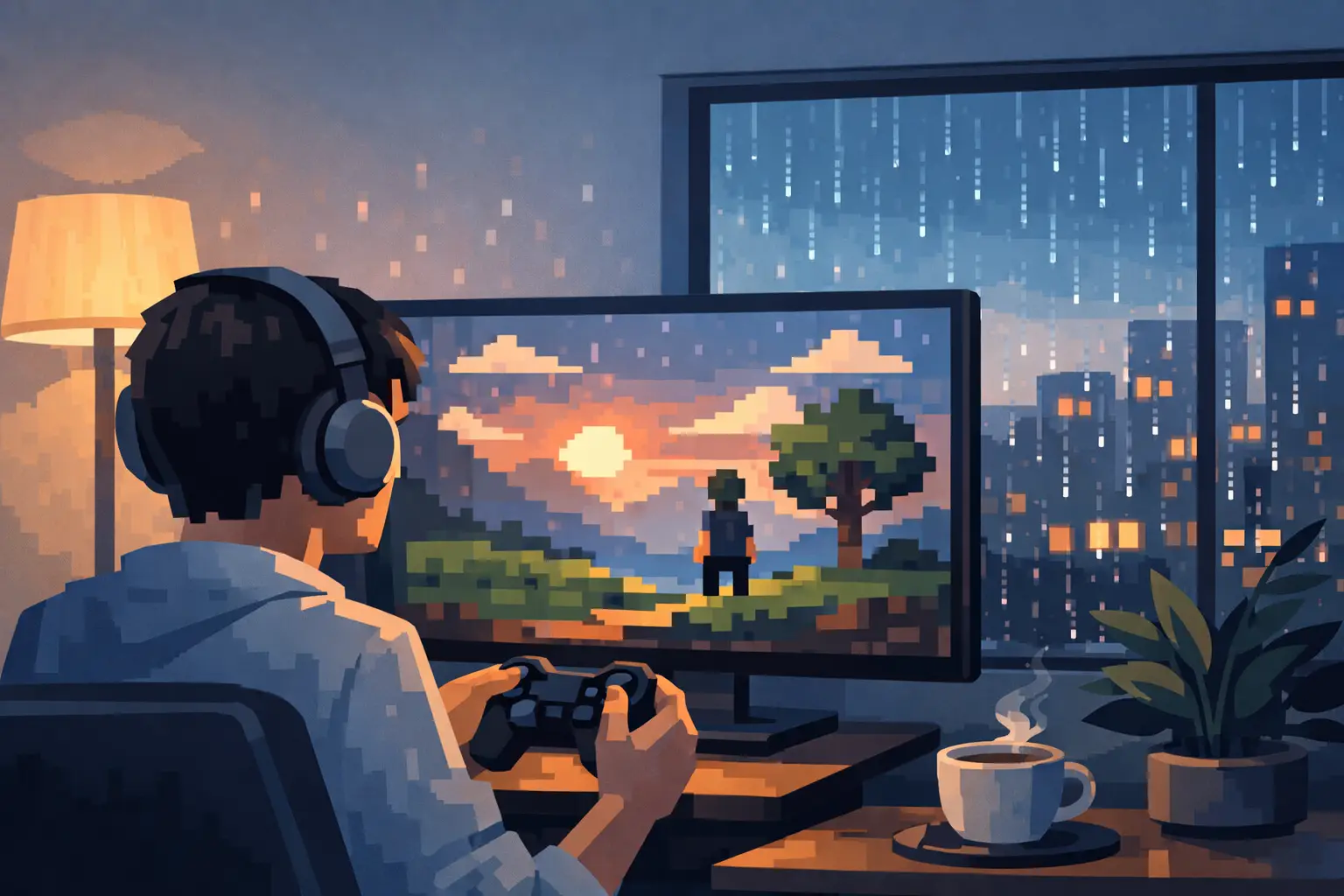
The workday does not always end when the laptop closes. A conversation may replay in your head. A full inbox can leave a faint sense of urgency. Even a good day can create the kind of mental static that makes it hard to settle into the evening. A game to unwind after work should not add another set of demands. It should give your attention somewhere gentle to land.
That is a different purpose from chasing a high score, coordinating with a team, or learning a complicated system. Sometimes those games are exactly right. But when your energy is low, the best play can be quiet, visually satisfying, and easy to leave behind whenever dinner, a shower, or sleep calls.
What Makes a Game Relaxing After Work?
Relaxation is not simply the absence of challenge. A satisfying game still gives you a small sense of movement: something grows, improves, collects, or changes because you spent a moment with it. The difference is in the pressure. A calming experience does not punish you for stepping away, demand split-second decisions, or make every spare minute feel like a task to optimize.
The strongest after-work games tend to offer three things at once: low stakes, a pleasing sensory rhythm, and progress that happens at a comfortable pace. You can watch something beautiful unfold, make a few simple choices, and feel that the time was well spent without having to perform.
Visual atmosphere matters more than people sometimes expect. Soft lighting, natural motion, and an uncluttered screen can help create a clear boundary between the pace of work and the pace of home. The goal is not to erase your thoughts. It is to give them less to grip.
Choose a Game to Unwind After Work Based on Your Energy
The right game depends on the kind of tired you are. If your brain feels crowded after meetings, spreadsheets, or coursework, avoid games that ask you to memorize builds, manage a timer, or react quickly. A slower idle experience can feel more restorative because it leaves room to breathe.
If you are physically tired but mentally restless, a light progression loop may be more satisfying. Seeing numbers rise, collecting passive rewards, and choosing an upgrade provides a gentle sense of completion. It is enough structure to feel engaging, without turning your evening into another project.
And if you mainly want a sensory reset, look for animation you could happily watch even without a goal attached. Rainfall, drifting objects, soft colors, and realistic movement offer a simple kind of comfort. A game does not have to be loud to hold your attention.
The comfort of passive progress
Idle games are especially well suited to short breaks because they respect interruption. You can check in for two minutes, collect what accumulated while you were away, make one or two decisions, and put your phone down again. There is no need to protect a streak of perfect focus.
That flexibility is valuable after work. Evening plans change. You may have ten quiet minutes on the couch, then need to make food or answer a call. A relaxing game should fit around your life rather than ask your life to fit around it.
Passive progress also reframes the feeling of “not doing enough.” The game continues at its own calm pace, and your return is rewarded rather than judged. That is a small design choice with a meaningful emotional effect.
Why Calm Visuals Can Feel So Satisfying
There is a special pleasure in watching a water droplet gather weight, merge with another, and glide down glass. The motion is familiar, but never exactly the same twice. It holds attention without demanding analysis, much like looking out a rain-covered window while the room is warm.
Droplet Idle builds its experience around that feeling. Realistic droplet physics, smooth 60 FPS animation, dreamy bokeh lighting, and a soothing rhythm turn each screen into a small ambient moment. The visual reward arrives immediately, before you ever think about upgrades or totals.
That does not mean the game lacks depth. Progression is still part of the comfort. You can improve your droplets, build passive earnings, return to offline rewards, and use prestige mechanics to begin a new cycle with more potential. The systems create a gentle reason to come back, while the presentation keeps the mood unhurried.
For players who enjoy idle games but feel exhausted by aggressive currencies, endless alerts, and competitive events, that balance matters. A progression system can be satisfying without being urgent. It can be present without becoming the entire point.
Keep Your Wind-Down Play Intentionally Light
A relaxing game works best when you give it a small place in your routine. Try opening it after you change out of work clothes, while your tea steeps, or during the few minutes between dinner and a favorite show. The consistent cue helps your mind recognize that the work portion of the day is over.
It also helps to play with notifications under control. If a game repeatedly pulls you back through alarms, limited-time pressure, or fear of missing out, it can blur the line between leisure and obligation. Choose a game that feels welcoming when you open it, not one that makes you feel late.
Keep the session short if that feels best. Five minutes of peaceful interaction can do more for your mood than an hour spent frustrated by a difficult level. There is no prize for turning rest into a marathon.
Notice whether the game leaves you calmer
A simple check can help you find the right fit: how do you feel when you put the game down? If you feel settled, lightly pleased, or ready to move on with your evening, it is doing its job. If you feel agitated, compelled to continue, or annoyed by what you did not finish, the experience may not match your after-work needs.
This is not a rule against challenge. Strategic, competitive, and story-rich games can be wonderful forms of play. They simply serve a different mood. The game you reach for after a demanding Tuesday may not be the one you want on a relaxed Saturday afternoon.
Let the Evening Be Yours Again
A game to unwind after work is not about escaping every responsibility or filling every quiet moment. It is about choosing a pause that feels genuinely yours: a few peaceful visuals, a little satisfying progress, and no pressure to be impressive.
When the day has asked for your focus, your patience, and your decisions, choose play that asks for very little in return. Let a small, soothing ritual mark the distance between work and whatever comfort looks like tonight.