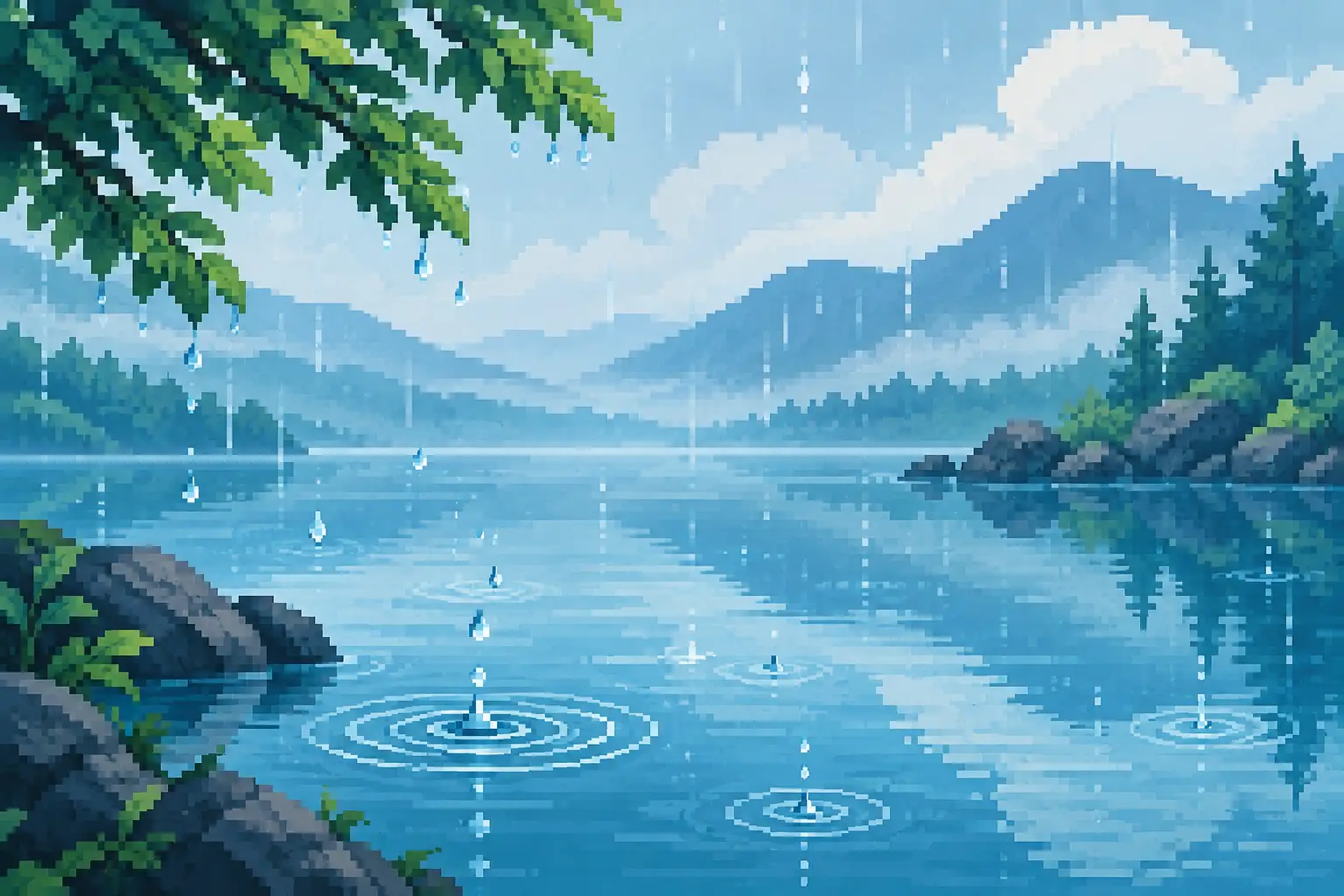
A single droplet pauses on the glass, grows as smaller beads join it, then slips downward in a slow, shining trail. That small moment is the heart of fluid simulation: digital motion designed to feel less like an effect and more like a familiar scene outside a rainy window.
For a calming idle game, water cannot simply move. It needs to gather, hesitate, merge, stretch, and respond in ways that feel quietly believable. When those details work together, watching the screen becomes a small visual reset - something satisfying to return to between tasks, during a short break, or while winding down for the evening.
What Fluid Simulation Changes on a Quiet Screen
Fluid simulation is the process of modeling how liquids behave in a digital space. In a game, it helps water react with a sense of weight and flow rather than following a visibly repeated animation. A droplet can swell as moisture collects, pull into a rounded shape, meet another droplet, and become one larger bead before gravity sends it across the screen.
The idea may sound technical, but the feeling is immediate. Water that moves with natural variation is easier to watch because the eye can follow it without effort. Each merge creates a tiny moment of anticipation. Each slow slide offers a gentle release. There is no timer to beat and no fast decision to make. The reward is built into the movement itself.
A convincing droplet effect depends on more than falling downward. Surface tension gives a bead its rounded form. Gravity encourages it to travel. Nearby droplets influence one another as they touch and combine. Light catches the edges, while a soft background gives each highlight room to glow. Even a subtle change in speed can make the scene feel peaceful rather than restless.
That is why realistic-looking water has such a different presence from a simple looping rain animation. A loop can be pleasant, but it becomes predictable quickly. Simulated motion keeps producing small, organic differences. No two moments need to look exactly the same, and that quiet unpredictability is part of the comfort.
Why Watching Water Feels So Satisfying
People have long found rain, ripples, and moving water calming. On a screen, the same appeal often comes from slow motion, soft soundless rhythm, and a clear visual cause and effect. A smaller droplet joins a larger one. The larger one becomes heavy enough to move. The trail it leaves changes the scene for a moment before new droplets begin to form.
This rhythm is especially well suited to low-pressure play. It provides enough activity to hold attention without asking for constant attention in return. You can watch closely for a minute, glance back after making coffee, or leave the game running while you take a breath between notifications.
The visual language matters, too. Dreamy bokeh lighting, translucent surfaces, and smooth 60 FPS animation can turn a plain screen into a softer place to rest your eyes. The goal is not visual noise. It is a sense of depth and motion that stays gentle, even when the screen fills with activity.
There is also satisfaction in seeing order emerge from small changes. One droplet does not seem significant. A hundred droplets slowly shaping the scene feel like progress. That makes water a natural match for idle gameplay, where small gains become meaningful over time.
Fluid Simulation Is More Than a Visual Effect
In a relaxing game, the best visuals and the best mechanics should support each other. Fluid simulation gives the game its atmosphere, while idle progression gives that atmosphere a reason to keep evolving. The droplets are not just decoration. They become part of the reward loop.
As your collection grows, water can form more often, merge more efficiently, or create greater value with each motion. Upgrades make the scene feel fuller without turning it into a spreadsheet. Offline rewards mean progress can continue while you are away, so returning feels welcoming instead of demanding.
Prestige systems can add another layer for players who enjoy a longer arc. The key is pacing. A reset should feel like refreshing the window for a new rainfall, not like losing ground. When the reward is clear and the next cycle begins smoothly, progression adds purpose while preserving the relaxed mood.
This balance matters because not every idle game feels restful. Some are built around rapid tapping, limited-time events, crowded menus, and the anxiety of missing an optimal move. Those systems can be fun for players looking for intensity, but they work against a quiet visual experience.
A calmer approach leaves room for choice. You can optimize when you feel like it, choose upgrades at your own pace, or simply enjoy the motion. The game remains satisfying whether you engage for ten focused minutes or let it sit beside you as a peaceful background companion.
The trade-off between realism and relaxation
Perfect physical realism is not always the goal. Real water can splash unpredictably, move too quickly, or create visual clutter. For a soothing screen, the motion needs to feel believable while staying easy to read.
That means a thoughtful fluid simulation may soften some of nature's chaos. Droplets might merge in a way that is more visually graceful than strictly scientific. Their paths may be clear enough to follow, and their timing may be slightly slower than a real rainstorm. These choices are not shortcuts. They are part of designing for comfort.
The same principle applies to performance. Detailed liquid behavior can be demanding, particularly on mobile devices. A game has to preserve smooth movement without draining the battery or making the phone feel warm in your hand. A steady frame rate often matters more to relaxation than adding every possible physical detail.
When water moves smoothly, it feels present. When it stutters, the spell breaks. Good design chooses the details players can feel: natural merging, graceful trails, responsive upgrades, and a stable, luminous scene.
A Small Ritual for Busy Days
Relaxation does not always require a long break or a carefully planned routine. Sometimes it is a few seconds spent watching a droplet gather light before it moves. A quiet idle game can offer that kind of pause without asking you to learn a complicated system or compete with anyone.
Droplet Idle builds around this idea by pairing realistic water motion with gentle progression. The screen stays active, your rewards continue to grow, and there is always another small visual moment waiting to happen. The experience has structure, but it does not rush you.
For some players, fluid simulation is a technical term. For others, it is simply the reason digital rain feels unexpectedly real. Either way, its value is found in the pause it creates: a smooth, shining movement that asks for nothing except a moment of your attention.
The next time a busy day leaves your mind feeling crowded, try choosing a screen that moves slowly. Let the droplets collect, merge, and find their way down. A little motion can be enough to make room for stillness.