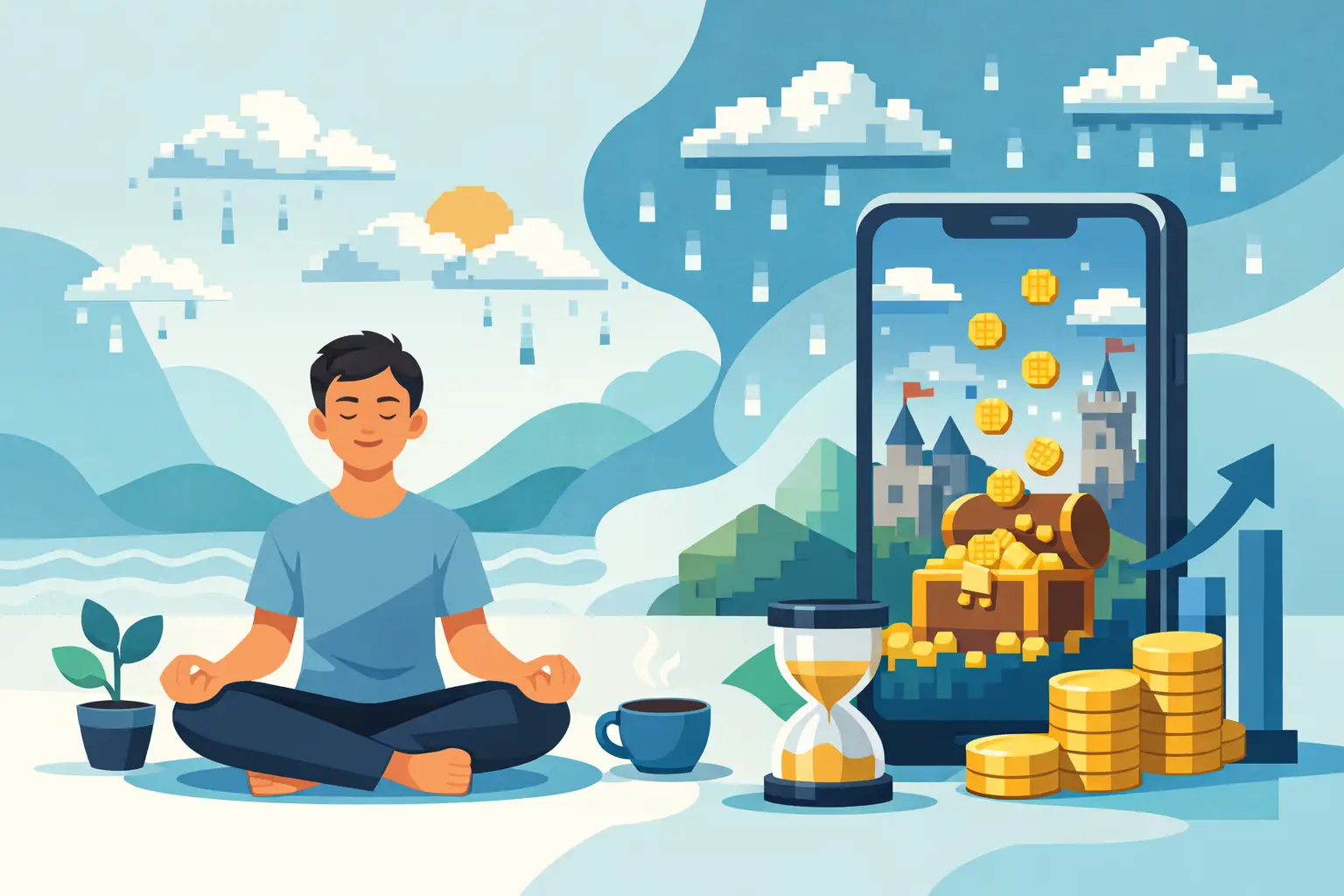
A quiet game can become another source of noise when every notification feels urgent, every upgrade feels overdue, and a five-minute check turns into an hour of chasing numbers. Learning how to play idle games mindfully means keeping the gentle part of the genre intact: enjoying small progress, pleasant visuals, and a pause from the day without letting the game claim all of your attention.
Idle games are especially suited to a calmer style of play. Their progression continues while you are away, so you do not need to hover over the screen to feel rewarded. The goal is not to extract the maximum possible output from every minute. It is to create a satisfying rhythm that fits around your life.
Start With the Feeling You Want
Before opening a game, take a moment to name what you want from it. Maybe you need a soft transition after work. Maybe you have ten quiet minutes between tasks. Maybe you want a comforting visual ritual before bed.
That intention changes how you play. If your goal is to decompress, a complicated optimization guide or a frantic round of tapping may not serve you, even if it produces faster progress. Choose the actions that support the feeling you came for.
A mindful session can be as simple as watching an animation for a moment, collecting offline rewards, choosing one upgrade, and putting the phone down. In a game built around the soothing rhythm of droplets forming and sliding across glass, the visual experience is not a distraction from progress. It is part of the reward.
Let Offline Progress Do Its Job
The most peaceful idle-game habit is also the one many players resist: leaving the game alone.
Offline rewards exist so progress can continue without constant checking. When you return after a few hours, there is a small sense of arrival. You can collect what has accumulated, make a choice, and continue with your day. Reopening the app every few minutes often replaces that pleasant payoff with a loop of tiny, unsatisfying checks.
Try setting a natural return point instead of relying on impulse. Open the game with your morning coffee, during an afternoon break, or once in the evening. The right schedule depends on the game and your routine, but it should feel spacious rather than compulsory.
If you enjoy checking in more frequently, that is fine too. The useful question is whether each visit leaves you calmer or more restless. Mindful play is not about strict rules. It is about noticing the effect a habit has on you.
Give each session a gentle boundary
A boundary does not have to be severe. You might decide to play until you collect rewards and make one meaningful upgrade. You might enjoy the game for the length of one song or while a cup of tea steeps.
This gives a session a clear beginning and ending. It also protects the comforting quality of a game from being swallowed by endless micro-decisions. When you close the app deliberately, you keep the pleasant feeling rather than playing until it fades.
Choose Progress Over Perfection
Idle games offer an inviting kind of growth: numbers rise, systems become more efficient, and each return can reveal a little more momentum. That is satisfying. It can also tempt players to treat every choice as a test with a perfect answer.
Most relaxing idle games do not require that pressure. A slightly less efficient upgrade path is rarely a real loss. If an upgrade feels fun, visually appealing, or easy to understand, it may be the right choice for your session. Progress that feels good is still progress.
This is especially true when prestige or reset mechanics appear. A reset can look like losing ground, even when it is designed to support a stronger next cycle. Rather than resetting the instant it becomes mathematically optimal, wait until you understand what you gain and feel ready for a fresh start. The sense of renewal should feel satisfying, not punishing.
There is room for strategy if strategy is part of your enjoyment. Some players find comfort in planning upgrade routes and comparing growth rates. Others prefer to follow intuition. Neither approach is more mindful by default. The better choice is the one that leaves your mind clearer when you stop playing.
Protect Your Attention From Artificial Urgency
A peaceful game should fit into your attention, not compete for it. Notifications can be useful when they remind you of something you genuinely want to return to. They are less helpful when they pull you away from a conversation, work task, meal, or rest.
Consider turning off alerts that create a false sense of urgency. You can still enjoy rewards, milestones, and new features when you choose to open the game. This small change restores a feeling of control.
It can also help to keep the game off your home screen if you tend to open apps automatically. Place it in a folder dedicated to relaxation, or use it intentionally during a planned break. The point is not to make play inconvenient. It is to make the choice to play visible again.
Notice when calm turns into compulsion
There is a simple difference between reaching for a game because it sounds pleasant and reaching for it because you feel unable to leave a timer, meter, or reward untouched. The first can be a restorative break. The second may be a sign to pause.
Watch for a few quiet signals: rushing through another activity to check the game, feeling irritated when you cannot play, or staying up later than intended to reach a target. These do not mean you have failed at mindful play. They simply show that the rhythm needs adjusting.
A short break from the game, fewer notifications, or a once-a-day check-in can bring it back into balance. A calming hobby should make room for your life, sleep, and relationships.
Make the Sensory Experience Part of the Break
Mindful play is easier when you let yourself actually notice the game. Instead of tapping through every screen at top speed, pause for a few seconds. Watch the movement. Notice the color, sound, texture, or visual pattern that makes the game pleasant.
For Droplet Idle, that might mean watching water gather, merge, and glide in a slow, realistic motion, softened by dreamy bokeh light. There is no need to turn a relaxing game into a formal meditation exercise. Simply giving your attention to one soothing detail can interrupt the mental rush of a busy day.
If sound supports your calm, use headphones or play at a low volume. If you prefer quiet, mute the game and enjoy the visual rhythm alone. Your ideal setup may change depending on where you are. A short break at your desk may call for silence, while an evening session may feel better with ambient sound.
Keep Spending and Comparison in Perspective
Mindful play includes your relationship with purchases and with other players. If a game offers optional upgrades, decide what feels comfortable before a limited-time offer or moment of excitement makes the decision for you. A simple personal limit can prevent a relaxing session from becoming a regrettable one.
Comparison deserves the same care. Other players may reach milestones faster, use different strategies, or share highly optimized progress. Their pace does not need to become yours. Idle games are built around accumulation, which means there will always be another level, upgrade, or milestone ahead.
Your progress is allowed to be slow. In fact, slow progress often creates more moments to enjoy: a return after time away, a small upgrade that changes the flow, a fresh prestige cycle, a screen that looks a little more beautiful than it did yesterday.
A Softer Way to Return
The best mindful idle-game routine is one you can leave without worry and return to with a small sense of pleasure. Let the game be a pocket of calm rather than another obligation on your screen.
Open it when you want a gentle reward. Let offline progress carry some of the weight. Choose upgrades with curiosity instead of pressure. Then close the app while the experience still feels light, and carry a little of that quiet momentum into whatever comes next.