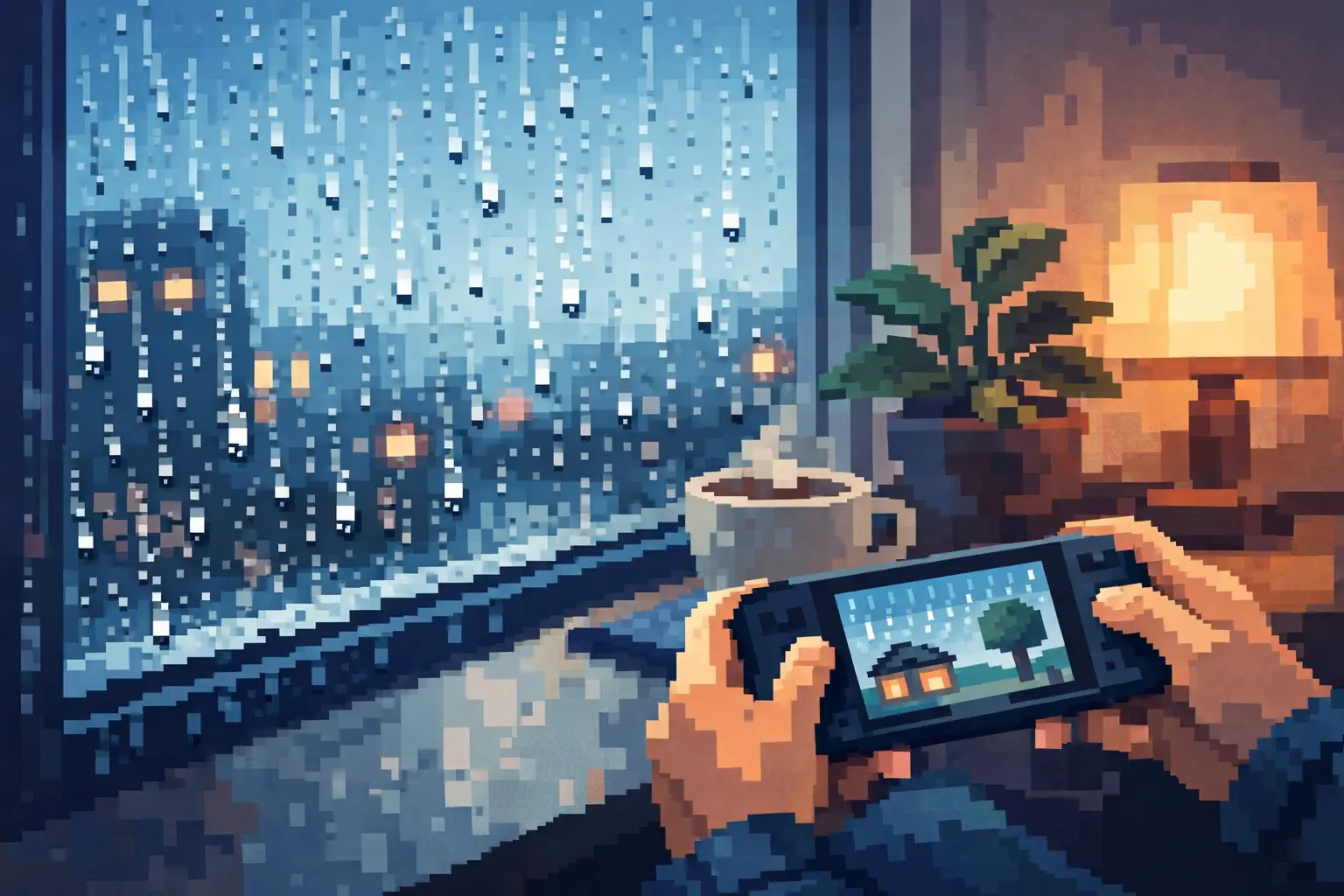
You open a rain window game for a minute, and somehow twenty have passed. Not because it demanded anything from you, but because the motion of droplets gathering, merging, and sliding across glass has a quiet pull. It feels familiar. It feels soft. And when that motion is paired with light idle progression, it becomes more than a pretty screen - it becomes a small place to settle your attention.
That is the real appeal of this kind of game. It offers the comfort of ambient visuals and the satisfaction of steady rewards without asking for constant input. For players who want something low-pressure at the end of a long day, that balance matters.
What makes a rain window game different
Most mobile games try to hold your attention through urgency. Timers flash. Missions stack up. Limited events push you to log in before you miss something. A rain window game works in the opposite direction.
Its best moments come from stillness, not noise. You are watching water bead on glass, catch light, join into larger drops, and slowly trace paths downward. That movement is naturally satisfying on its own, but the game layer adds a gentle sense of momentum. Numbers rise. Small upgrades improve droplet behavior, visual richness, or passive gain. You feel progress, but you do not feel chased.
That trade-off is important. If a game leans too far toward pure ambience, it can become forgettable. If it leans too hard into optimization, it loses the softness that made it appealing in the first place. The strongest rain-themed idle experiences sit in the middle. They are calm enough to be restful and structured enough to feel rewarding.
Why the rain window game effect feels so soothing
There is a reason rain-on-glass imagery shows up so often in relaxation videos, sleep playlists, and background visuals. The pattern is dynamic, but not chaotic. It changes constantly, yet within a narrow and predictable range. Your eyes have something to follow, but your brain does not need to solve anything.
That makes this style of game especially good for short decompression sessions. You can check in during a break, let the screen rest beside you while you work, or use it as part of an evening wind-down. It does not compete aggressively for your focus. It simply gives your attention somewhere soft to land.
Visual design matters here more than many players realize. Realistic droplet physics, smooth animation, subtle lighting, and a sense of depth all shape whether the experience feels mesmerizing or merely decorative. At 60 FPS, droplets can feel almost tactile. Add soft bokeh and clean glass reflections, and the screen starts to resemble a moving piece of ambient art rather than a typical idle interface.
Sound can enhance that effect, but it depends on the player. Some people want a full sensory cocoon. Others prefer visual calm with their own music or silence. A good relaxation game respects both habits instead of forcing one mood on everyone.
The role of progression in a calming game
Relaxing does not have to mean empty. In fact, many players enjoy calm games more when there is some measurable forward motion underneath the visuals.
This is where idle systems help. Passive rewards, upgrades, scaling output, and prestige loops create a reassuring rhythm. You open the game, collect what has accumulated, make a few meaningful choices, and return to the flow of droplets. The interaction is light, but it still gives you that satisfying sense that your time added up to something.
The trick is pacing. If upgrades come too slowly, the game can feel static. If they come too fast, the atmosphere gets buried under constant tapping and menu management. A well-made rain window game uses progression to support the mood rather than interrupt it.
That is part of why idle mechanics fit this theme so naturally. Rain already suggests patience. It collects over time. It shifts gradually. Progress that arrives in a gentle stream feels emotionally aligned with the visual concept. You are not grinding through intensity. You are watching accumulation become momentum.
Who this kind of game is really for
A rain window game is not trying to win over players who want high-speed competition or complex tactical depth. Its audience is different, and that is a strength.
It fits people who use games as a way to reset between tasks or soften the edges of a busy day. It fits players who like seeing numbers grow but do not want to babysit every system. It also fits anyone drawn to atmospheric design - the kind of player who notices lighting, texture, motion, and how a screen makes them feel.
There is also a strong overlap with traditional idle game fans. Many enjoy prestige systems, upgrades, and offline earnings, but not the noise that often comes with them. They want the structure without the pressure. A rain-based idle experience can give them exactly that.
Age matters less than mindset here. Older teens and adults often connect with this style because it slides easily into real routines. A few minutes in the morning. A quick check during lunch. Ten calm minutes before bed. It adapts to your pace instead of asking you to adapt to its demands.
What to look for in a good rain window game
Not every game built around a calm concept actually feels calming. Sometimes the visuals are lovely, but the interface is cluttered. Sometimes the progression is solid, but the atmosphere is thin. The best versions bring both together.
The first thing to look for is motion quality. Droplets should behave in a believable way, with enough variation to stay interesting and enough smoothness to feel soothing. If the animation stutters or the physics feel artificial, the illusion breaks quickly.
Next comes clarity. Menus, upgrades, and rewards should be easy to understand at a glance. A relaxing game should not make you decipher dense screens or chase hidden systems. Simplicity is not the same as shallowness. It just means the game respects your mental bandwidth.
Then there is progression depth. A calm game still needs reasons to return. That can come through unlocks, stronger passive production, new visual layers, or prestige systems that refresh the loop in a satisfying way. The ideal balance is enough depth to create long-term interest without losing the sense of ease.
Finally, pay attention to how the game feels when you are not actively playing. Offline rewards, passive generation, and low-maintenance loops are part of what make the experience stress-free. If you feel punished for stepping away, the whole mood changes.
Why this niche keeps growing
The rise of the rain window game reflects a broader shift in what many players want from mobile entertainment. Not every session needs adrenaline. Not every reward loop needs urgency. There is growing room for games that feel restorative.
That does not mean players have lost interest in depth. It means depth is being appreciated in new forms. A beautifully animated screen with a satisfying progression curve can be just as compelling as a louder, busier game. For some people, it is more compelling because it fits their life better.
This is especially true on mobile, where the best games often understand fragmented attention. People play while waiting, resting, multitasking, or winding down. A calmer format fits those moments naturally. It offers presence without pressure.
Games like Droplet Idle show why this approach works. When realistic droplet motion, dreamy lighting, passive rewards, and clean upgrade systems are combined with care, the result feels less like a distraction and more like a ritual. You check in, breathe a little deeper, make a bit of progress, and leave feeling lighter than when you arrived.
That is a rare quality in any genre.
A quiet kind of replay value
The most lasting appeal of a rain window game is not novelty. It is returnability. You come back because the experience remains pleasant, even when you already know the loop. The screen still shimmers. The droplets still gather. The progress still accumulates in a steady, reassuring rhythm.
For players who are tired of games that always want more attention, more urgency, and more effort, that quiet consistency can feel surprisingly valuable. Sometimes the right game is not the one that floods your senses. It is the one that softens the room for a while and gives your mind a gentler place to rest.