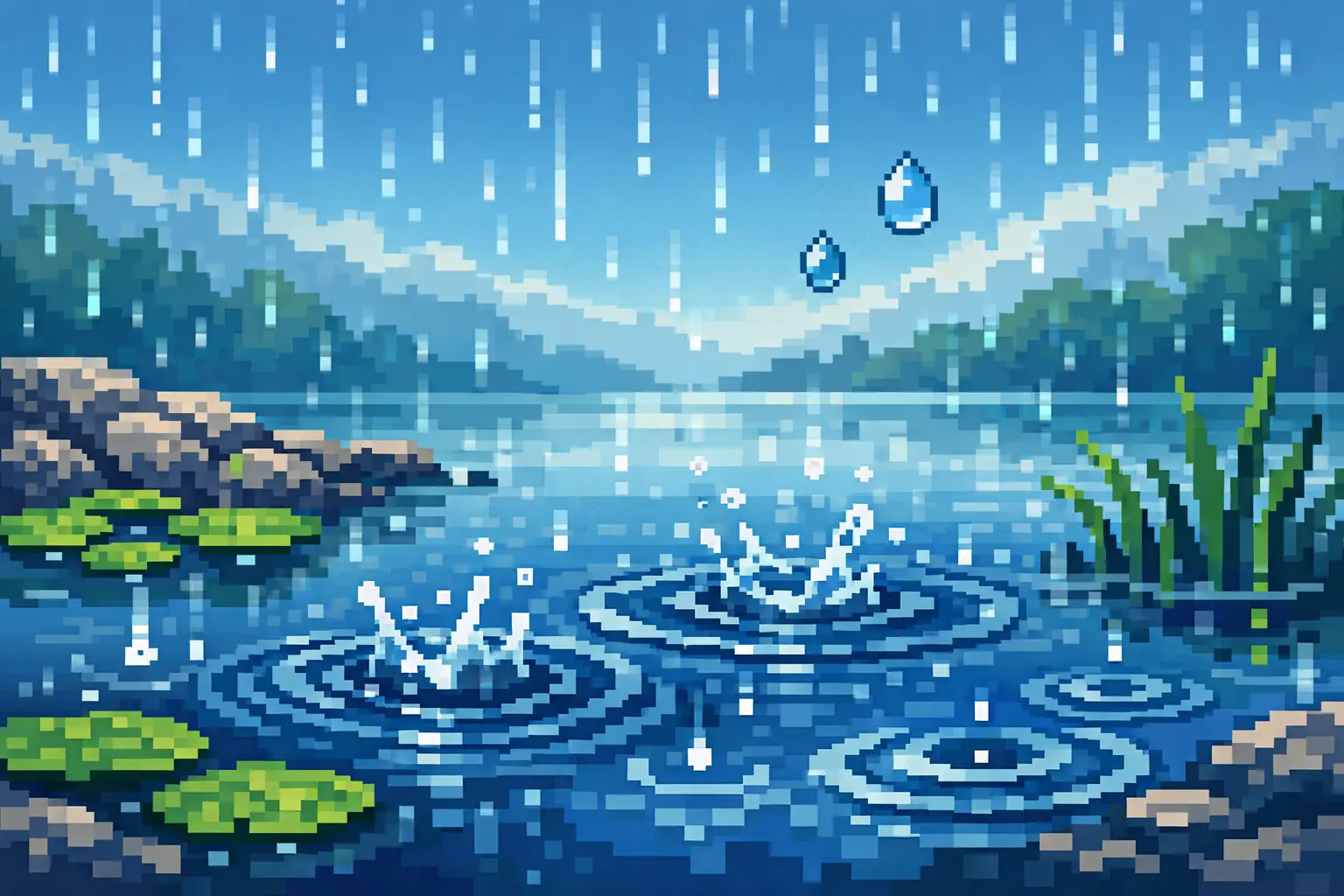
A rain-speckled window can make an ordinary moment feel quieter. One droplet gathers weight, another catches it, and then both glide downward in an unhurried path. A realistic droplet animation game brings that small, familiar comfort to a screen, turning a few spare minutes into a gentle visual pause rather than another demand for attention.
That distinction matters. Many games ask players to react faster, plan harder, or check back before a timer runs out. A droplet-focused idle experience offers something softer: mesmerizing motion, a soothing rhythm, and progress that continues without pressure. It is play designed to fit between tasks, beside a cup of tea, or at the end of a long day when your mind has already done enough.
What Makes Droplet Animation Feel So Satisfying?
Water is naturally engaging to watch because it is never quite still. Tiny beads form on a surface, grow as more moisture collects, touch nearby droplets, and merge into larger shapes. When the movement feels believable, each change has a quiet sense of cause and effect. Nothing needs to explode or flash to hold attention.
A convincing droplet animation depends on details people often feel before they consciously notice them. The drop needs to round into shape, stretch slightly as gravity takes over, and leave the impression of a wet trail as it slides. When two droplets meet, the merge should feel fluid rather than abrupt. Smooth 60 FPS motion helps preserve that illusion, making the screen feel less like a static game board and more like rain resting on glass.
Dreamy bokeh lighting adds another layer of comfort. Soft points of color in the background give the scene depth without clutter. They suggest a rainy evening outside a window, where the world beyond the glass is present but pleasantly out of focus. The result is visual satisfaction with very little cognitive effort required.
A Calm Alternative to High-Pressure Games
Relaxing games are not all alike. Some still rely on urgent quests, endless notifications, or complicated systems that turn a break into a checklist. For players seeking decompression, those mechanics can work against the mood.
A realistic droplet animation game takes a different approach. The central visual is already rewarding, so gameplay does not need to compete for attention. You can watch droplets gather and slide for a few moments, make a simple upgrade, and leave knowing that your progress is still moving forward.
This is where idle design earns its place. Passive rewards make the experience welcoming for people with uneven schedules. There is no need to maintain a streak, coordinate with a team, or remember a dense build strategy. Check in when it feels good, collect what has accumulated, and choose the next small improvement. The game respects both five-minute breaks and longer, quieter sessions.
There is a trade-off, of course. Players who want sharp competition, elaborate combat, or difficult tactical puzzles may find the pace too gentle. But for an audience looking for a stress-free experience, gentleness is not a missing feature. It is the point.
The Gentle Progression Behind the Rain
Calm gameplay still needs a reason to return. The best idle games create that pull through steady, understandable progress rather than constant urgency. In a droplet game, each upgrade can make the screen feel a little more alive: more droplets forming, more satisfying merges, or more resources gathering while you are away.
The appeal comes from watching small improvements compound. A single choice may feel modest, but over time it changes the pace of the whole scene. That creates the familiar satisfaction idle-game fans enjoy, without burying it under menus and competing currencies.
Upgrades Should Feel Like a Softer Kind of Reward
In a calming experience, upgrades work best when they reinforce the atmosphere. Faster formation, richer visual activity, and more rewarding passive collection all support the feeling that the rainy window is gradually waking up. The numbers matter, but they do not need to dominate the screen.
Clear choices are especially valuable. When players immediately understand what an upgrade does, they can make progress without shifting into problem-solving mode. That keeps the experience easy to return to after a busy meeting, a commute, or a tiring evening.
Offline Rewards Keep the Pace Comfortable
Offline progress is one of the quiet strengths of the idle format. It removes the fear that stepping away means falling behind. Close the game, live your day, and return to see that the droplets have continued their patient work.
That rhythm helps a game become a companion rather than an obligation. There is still a satisfying sense of growth, yet the player remains in control of when to engage. For people who already have enough alerts and deadlines, that freedom can feel surprisingly restorative.
Prestige Can Add Depth Without Breaking the Mood
Prestige systems give long-term players a fresh layer of progress by allowing a reset in exchange for lasting benefits. In a high-intensity game, that reset may feel like a demanding optimization decision. In a calmer setting, it can feel more like clearing the glass for a new rainfall.
The key is transparency. Players should understand what they keep, what begins again, and why the next cycle will feel rewarding. When prestige is presented as an optional new chapter instead of a requirement, it adds depth for dedicated players while preserving the low-pressure mood for everyone else.
When Is This Kind of Game Most Useful?
A droplet animation game is particularly suited to transitional moments. It can fill the small gap before an appointment, offer a visual reset after concentrated work, or provide a low-effort ritual before sleep. Unlike a game built around intense rounds, it does not demand that you arrive energized.
It can also work well in the background. Some players enjoy interacting with every upgrade, while others simply like the living, rain-on-glass motion nearby as they relax. Both are valid ways to play. The experience does not insist on one correct level of attention.
That flexibility is valuable because relaxation is personal. One person may find calm in collecting a batch of offline rewards and planning a few upgrades. Another may find it in watching one large droplet slowly pull smaller drops into its path. A thoughtfully designed game leaves room for both.
Why Visual Quality Changes the Whole Experience
For a game centered on water, animation is not just decoration. It is the experience. If droplets move in stiff loops or merge without weight, the calm illusion breaks. If motion is smooth and the lighting feels soft, even a simple interaction can become deeply pleasing.
This is why realistic physics and visual polish matter more here than in many idle games. They create trust in the tiny world on screen. You do not need to understand the technical details behind each drop. You only need to feel that it behaves the way water should.
Droplet Idle is built around that feeling: the familiar comfort of rain on a window, paired with simple incremental progress that never asks for more energy than you want to give. The goal is not to keep players tense and chasing the next demand. It is to make every return feel easy, beautiful, and quietly rewarding.
The next time your attention feels stretched thin, consider choosing entertainment that gives a little space back. A few drops gathering, merging, and sliding down the glass may be all the invitation you need to slow down for a moment.