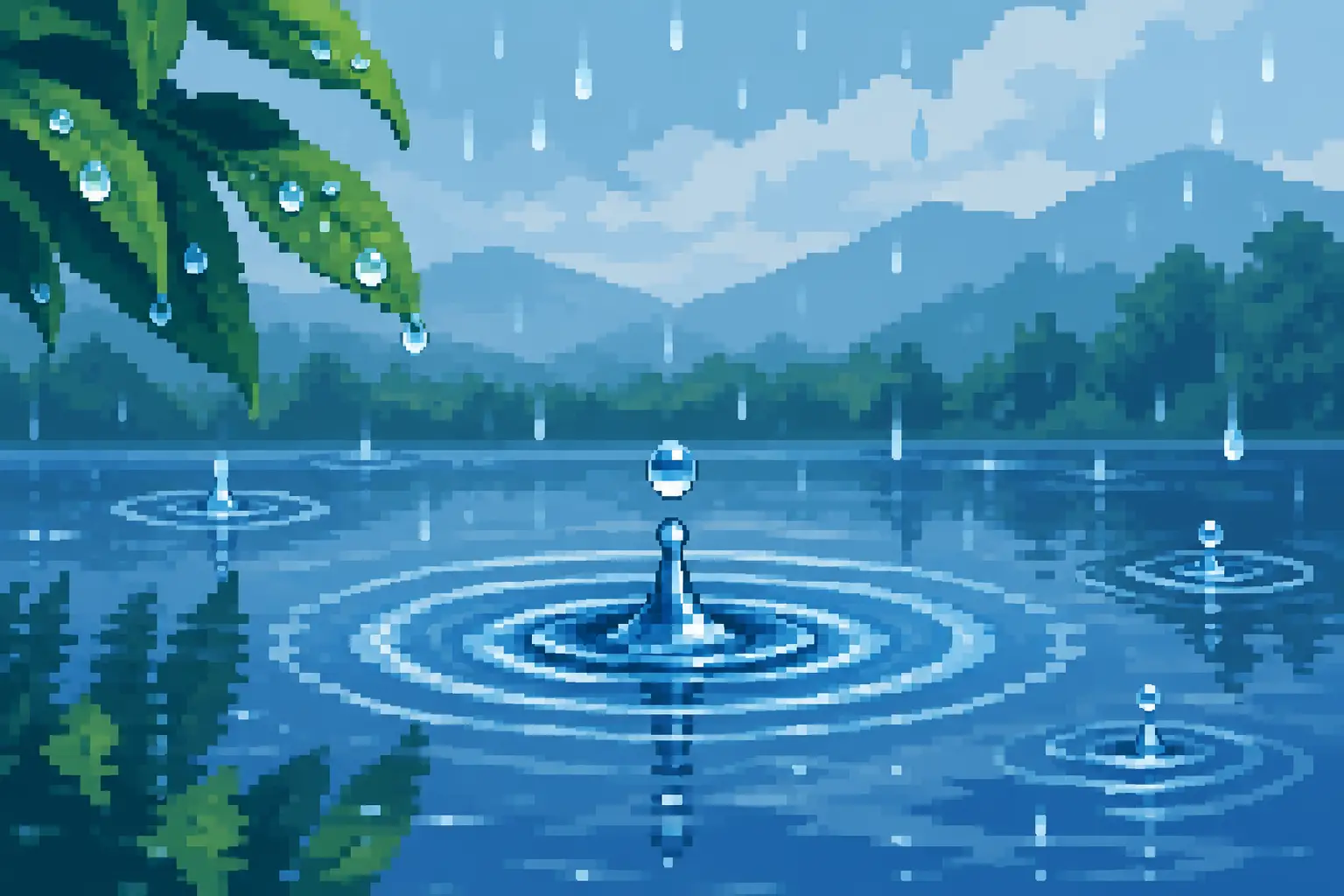
A single bead of water gathers at the top of a window, swells almost imperceptibly, then releases and traces a shining path downward. Nothing needs your attention. Nothing is asking you to react quickly. Yet it is hard to look away. That is what makes droplet physics satisfying: motion that feels familiar, believable, and complete enough to give the mind a small, welcome place to rest.
For a relaxing game, this feeling matters more than spectacle. Realistic droplets turn a screen into a quiet visual rhythm - one that rewards a glance during a break, softens the edge of a busy evening, and remains pleasing when you simply let it play in the background.
What Makes Droplet Physics Satisfying to Watch?
The answer begins with expectation. Everyone has seen rain gather on glass, water cling to a cold drink, or a drop race down a shower wall. We already understand the basic behavior before we consciously think about it. When an animated droplet follows that behavior, the brain recognizes a pattern it trusts.
A small drop holds its shape. As more water collects, it becomes heavier and stretches under gravity. It hesitates against the surface, then slips free. That tiny sequence has tension and release, but without the loudness of a dramatic event. Your eyes get a gentle payoff every time the drop finally moves.
The most satisfying animations do not make water look overly perfect. Real droplets pause, wobble, leave a faint trail, and take slightly different routes. Those little variations keep the scene alive. If every drop fell at the same speed in the same straight line, the effect would feel mechanical rather than calming.
A familiar kind of unpredictability
Droplet motion sits in a comfortable middle ground. It is predictable enough to feel safe, but variable enough to remain interesting. You know a large drop will probably fall. You cannot know exactly when it will release, which smaller drops it will collect, or how its path will change after a merge.
That balance is quietly absorbing. It gives the mind something to notice without turning observation into work. There is no puzzle to solve and no correct response to find. There is simply the pleasant question of what the water will do next.
The Pleasure of Merging and Momentum
Few visual moments are as naturally rewarding as two droplets becoming one. A smaller bead touches a larger one, their edges pull together, and a single heavier drop emerges. The action is quick, clear, and easy to understand at a glance.
Merging also creates a sense of accumulation. The new droplet is not just different - it carries the history of the drops that came before it. It grows, gains momentum, and is more likely to begin its own slow slide. That makes each tiny encounter feel like progress, even before any game reward appears.
This is one reason water works so well in a calm idle experience. The visual event and the emotional reward align. Growth is visible. Motion has a reason. A result arrives naturally rather than being forced by flashing prompts or urgent timers.
There is a trade-off, of course. Physics that are too subtle can be missed on a quick glance, while motion that is too exaggerated can feel cartoonish or restless. The sweet spot is readable movement with a soft touch: enough detail to feel real, enough clarity to feel rewarding.
Why smooth animation changes the feeling
Fluid movement depends on timing as much as appearance. When a drop shifts smoothly across the screen, the eye can follow its weight and direction without interruption. At 60 FPS, that motion feels less like a set of separate images and more like a continuous physical event.
Smoothness is especially valuable in a game designed for unwinding. Choppy motion can create a subtle sense of friction. A clean glide, by contrast, lets the visual rhythm stay gentle. It supports the feeling of rain moving across glass instead of demanding that you inspect an animation.
Light has a role here, too. Soft highlights make droplets appear rounded and present. Dreamy bokeh in the background adds depth without competing for attention. The goal is not to make every corner of the screen busy. It is to give each droplet a little shimmer, so even a simple slide feels tactile and alive.
Why Imperfect Paths Feel More Relaxing
Perfect lines are satisfying in some games. Water is different. A droplet that curves around an invisible texture, slows near a dry patch, or catches another bead along the way feels closer to the world outside the screen.
That realism creates a low-stakes form of attention. You may notice a trail gradually forming or watch one drop take an unexpectedly long route. These details invite you to linger, but they do not punish you for looking away. When you return, the scene has continued in its own quiet way.
This is a useful contrast to games built around constant decisions. Many players enjoy optimizing a build or chasing a timed objective, but that kind of focus asks for mental energy. Droplet physics offers a different reward: the comfort of observing a system that is already in motion.
It depends on the moment. A player may want deep strategy on a long commute and something softer before bed. A relaxing idle game does not have to replace more demanding games. It can be the place you go when you want a small sense of progress without adding another task to your day.
When Physics Meets Gentle Progression
Beautiful motion can hold attention, but progression gives that motion a welcoming sense of return. Each droplet can contribute to a larger, simple loop: watch water form, collect passive rewards, choose an upgrade, and let the calm scene continue.
The key is keeping the mechanics in service of the mood. Offline earnings mean the experience respects time away from the screen. Upgrades create satisfying milestones without requiring a complicated plan. Prestige can offer a fresh layer of growth while preserving the familiar visual comfort that brought you back in the first place.
In Droplet Idle, those systems are designed to sit behind the rain-on-a-window feeling rather than overpower it. You can make a meaningful choice, enjoy the reward, then return to watching droplets gather and glide. The numbers provide structure; the water provides the exhale.
That pairing matters because passive progress feels better when it has a visible companion. A reward counter rising on its own can be useful, but it is abstract. Seeing drops merge, grow, and move gives progression a physical rhythm. The game is not only telling you that something is happening. It lets you feel it happening.
A Small Screen Can Become a Softer Space
The satisfaction of droplet physics is not about doing more. It is about watching a simple process behave beautifully. A drop forms. It joins another. It grows heavy enough to travel. Then a new one begins, and the rhythm carries on.
That cycle can be especially comforting because it asks so little from you. There are no social expectations, no fast reflexes, and no pressure to keep up. Whether you have thirty seconds between meetings or a few quiet minutes before sleep, the screen offers the same calm invitation: look for a moment, collect a little progress, and breathe.
The next time a droplet pauses on the glass before sliding away, let it take its time. Sometimes the most satisfying motion is the kind that reminds you that you do not have to rush either.