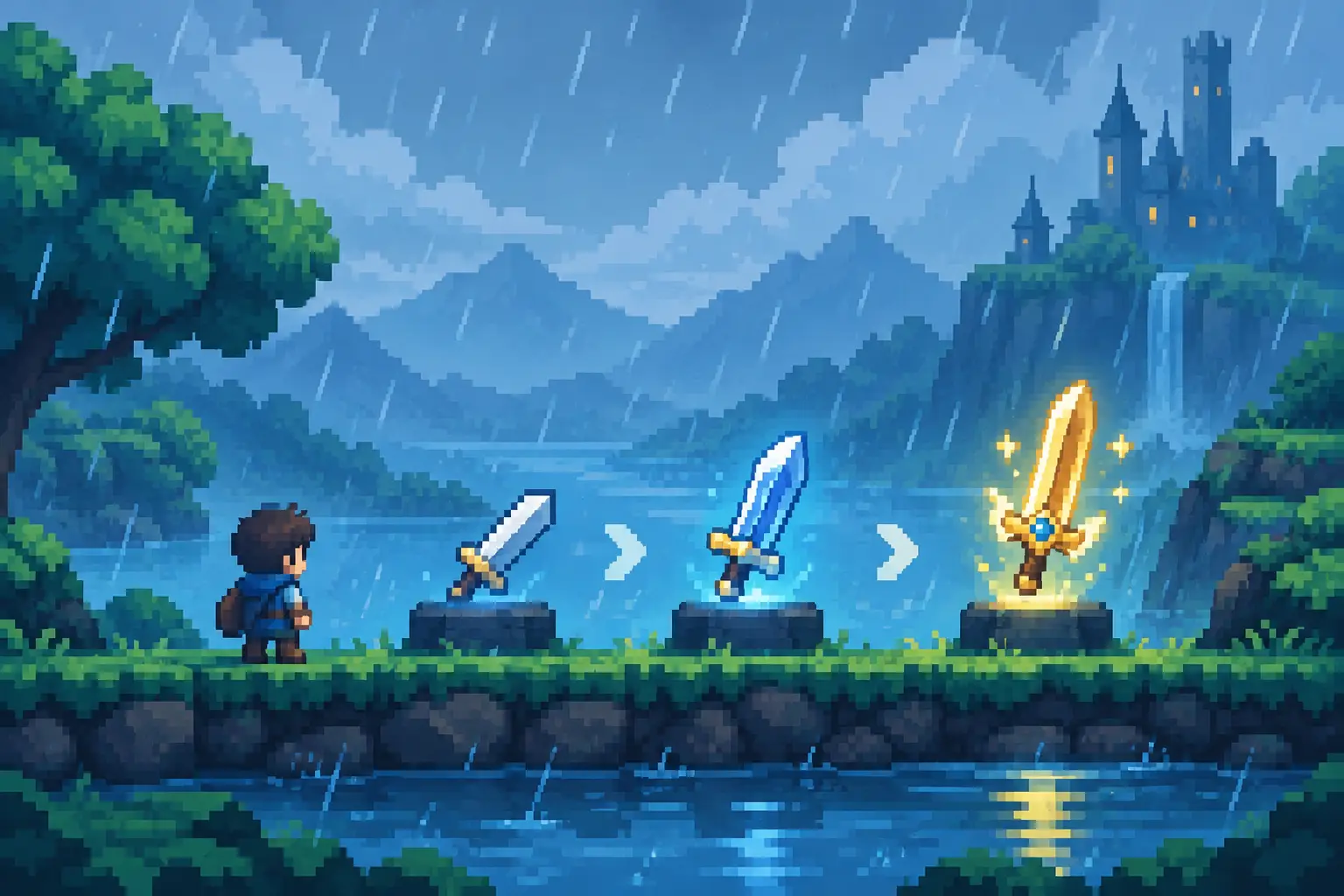
A glowing droplet gathers weight at the top of the screen, joins another, and slowly traces its path down the glass. You return a few minutes later and wonder: are upgrades permanent, or will that quiet progress disappear when you reach a new stage? It is a fair question, especially when a game is meant to feel like a small moment of calm rather than another system to manage.
In most idle games, upgrades are designed to make your long-term progress feel meaningful. But not every improvement works in exactly the same way. Some remain with you forever, some reset during prestige, and some are temporary boosts that help one particular session flow more smoothly. Knowing the difference removes uncertainty and lets you enjoy the soothing rhythm of progress at your own pace.
Are Upgrades Permanent in Idle Games?
Usually, yes - standard upgrades are permanent unless the game clearly identifies them as temporary, timed, or tied to a reset system. When you spend your earned currency on a production improvement, a speed increase, or a stronger passive reward, that purchase normally continues working after you close the app and return later.
That permanence is at the heart of the idle-game loop. Each upgrade makes the next stretch of progress a little easier. Numbers rise, rewards arrive more steadily, and the experience gradually opens up without demanding constant attention. You are not expected to replay the same small steps from the beginning every time you take a break.
Still, “permanent” can mean different things depending on the type of progression involved. A helpful way to think about it is this: regular upgrades support your current journey, while prestige upgrades support every journey that follows.
The Difference Between Regular Upgrades and Prestige
Regular upgrades are the familiar improvements you purchase as you play. They may increase how quickly resources appear, improve the value of passive earnings, or make each interaction more rewarding. These upgrades generally stay active for as long as you remain in your current progression run.
Prestige, sometimes called rebirth, reset, or ascension, changes that arrangement. It asks you to trade a portion of your current progress for a longer-lasting advantage. A prestige reset may return regular upgrades and accumulated currency to their starting state, but it usually grants a special currency, multiplier, or permanent bonus in exchange.
This is not meant to erase your effort. It is a gentle way of turning a completed phase into momentum for the next one. The early steps that once took time become easier, and the next layer of upgrades becomes more reachable. For players who enjoy idle systems but do not want pressure, prestige works best when it feels optional: a rewarding choice to make when progress has naturally slowed, not a deadline to chase.
What commonly stays after a reset
The details vary by game, but prestige systems often preserve progress that represents account-wide or long-term growth. This can include unlocked features, prestige currency, permanent multipliers, achievements, collections, and certain milestone rewards.
Some games also keep cosmetic choices and settings. That matters more than it may sound. When a relaxing game is part of an evening routine, familiar visuals, audio preferences, and accessibility settings should feel like your own space each time you return.
What commonly resets
A reset often affects the resources and standard upgrades connected to the current run. Think of the currency you are earning now, the upgrades purchased with it, and any short-term production chain built around that currency.
The trade-off is simple: you let go of immediate scale in order to gain a lasting advantage. If the reset is well balanced, you should feel the benefit fairly soon afterward. Returning to the beginning should not feel like losing the view from the window. It should feel like watching the first few droplets gather faster because of everything you learned and earned before.
Not Every Upgrade Is a Forever Upgrade
A clear upgrade screen can tell you a great deal before you spend anything. Permanent upgrades usually mention lasting effects, lifetime bonuses, or benefits that remain through resets. Temporary upgrades tend to show a timer, a session label, or wording that connects them to a particular round, event, or boost.
Be especially aware of these three categories: timed boosts, consumable items, and event rewards. Timed boosts may speed progress for minutes or hours. Consumables may provide an immediate benefit and then disappear once used. Event rewards may only apply while a seasonal activity is available. None of these are bad value by default. They simply serve a different purpose from a permanent upgrade.
The best choice depends on how you play. If you open an idle game for a few peaceful minutes between tasks, a lasting passive improvement may feel more satisfying. If you have reached a specific goal and want a small burst of momentum, a temporary boost can be useful. There is room for both, as long as the game makes the difference easy to understand.
How Offline Rewards Fit Into Permanent Progress
Offline rewards are another reason permanent upgrades matter. When you step away, a well-designed idle game can continue recognizing the time that has passed and offer rewards when you come back. Permanent upgrades often improve this passive flow by raising earning rates, increasing storage limits, or making your return more valuable.
That does not mean you need to check in constantly. In fact, the gentler the experience, the less urgent each return should feel. Offline rewards are most comforting when they turn time away from the screen into a pleasant surprise, not when they make you worry about missing a perfect collection window.
In a game like Droplet Idle, the feeling of progress can be part of the atmosphere. You might open the app after a busy afternoon, see your accumulated rewards, choose one thoughtful improvement, and let the realistic droplets continue their unhurried motion. The upgrade is not only a number going up. It is permission to enjoy the scene without needing to optimize every second.
When Should You Spend or Save?
If an upgrade is permanent within your current run, spending early can often help because its benefit has more time to work. A production increase purchased near the start may generate value across many future minutes, hours, or offline returns.
But saving can also be the better choice when a major unlock is close. A new feature, a meaningful milestone, or a prestige opportunity may offer a larger change than several smaller upgrades. There is no universal answer because the most relaxing strategy is the one that does not turn your downtime into a spreadsheet.
A simple approach is to spend when an upgrade gives a noticeable improvement to your current rhythm, and save when you have a clear, near-term goal. If you are uncertain, wait a moment. Calm idle games reward patience as naturally as activity.
A Quick Way to Check Before You Commit
Before buying an upgrade, look for the effect description and any reset language. Ask whether it says “permanent,” whether it mentions a timer, and whether the prestige screen explains what carries over. Those small details tell you whether you are building lasting growth, improving the current run, or using a short-lived convenience.
If the wording is unclear, it is reasonable to hold your currency until you understand the choice. Good progression design should never make you feel rushed into a purchase you cannot explain. The most satisfying upgrade systems show you what is changing and let you enjoy the result without second-guessing it.
Progress is more enjoyable when it feels like a soft accumulation rather than a demand. Let each upgrade be a small, visible sign that your time has added up - like another droplet forming, growing, and finding its way down the glass.