That little countdown badge can change the feeling of a game instantly. What began as a quiet break becomes a reason to check in, claim a reward, and worry about missing something. The best games without timed events offer a different rhythm: you can open them when you have five peaceful minutes, set them aside for a week, and return without feeling behind.
For players who use games to decompress, that freedom matters. A relaxing game should fit around your life, not ask your life to fit around its event calendar. The picks below focus on self-paced play, gentle progression, and satisfying moments that are still waiting for you whenever you return.
What makes a game truly pressure-free?
A game does not need to be completely still to feel calm. It can have goals, upgrades, puzzles, levels, and even a little challenge. The key difference is whether a reward disappears because you were not online at a particular hour or during a particular week.
The most relaxing choices let you pause freely, revisit completed spaces, and progress at a pace that feels good. Some games have day-and-night cycles inside their worlds, but that is different from a limited-time event. Others may occasionally receive seasonal content through updates, so it is always wise to check the current version before downloading if avoiding every event is a priority.
12 best games without timed events for slower play
1. Droplet Idle
Droplet Idle turns idle progression into a soft visual ritual. Watch realistic droplets form, merge, and slide across a rain-covered surface while passive rewards build in the background. Upgrades and prestige give the experience satisfying structure, but there is no need to race a clock. It is especially lovely for an evening wind-down, when mesmerizing water physics and dreamy bokeh lighting are more appealing than another to-do list.
2. Townscaper
Townscaper is less about winning than making a place you want to look at. Tap to place colorful buildings on water, and the game’s simple rules turn them into stairways, gardens, arches, and tiny waterfront neighborhoods. There are no missions demanding attention and no wrong layout. A few minutes can create a charming island, while a longer session can become a whole floating city.
3. Dorfromantik
Dorfromantik combines a tile-laying puzzle with the warmth of building a miniature countryside. Place forests, fields, rivers, and villages to create a landscape one tile at a time. There is scoring, but the pace remains yours, especially in its more relaxed play options. The quiet satisfaction comes from watching scattered pieces become a coherent world.
4. Unpacking
Unpacking finds comfort in an everyday task: taking belongings out of boxes and giving them a home. Each room tells part of a life story through objects, colors, and small changes in space. There are gentle placement rules, yet no timer looming over the process. It is a thoughtful, tactile game for players who enjoy order, visual detail, and a calm sense of completion.
5. Monument Valley
Monument Valley’s impossible architecture feels like a moving piece of art. Guide its quiet protagonist through optical-illusion pathways by rotating structures and revealing new routes. The puzzles are elegant rather than frantic, with room to pause and simply enjoy the color, sound, and shape of each scene. It is ideal when you want a short, focused escape that does not leave your mind buzzing.
6. A Little to the Left
For anyone who finds a neatly arranged desk, shelf, or drawer deeply satisfying, A Little to the Left offers dozens of small moments of calm. Sort stationery, stack dishes, straighten picture frames, and discover that some puzzles allow more than one pleasing solution. A mischievous cat adds a touch of personality, but never pressure. The game understands that tidiness can be playful.
7. Islanders
Islanders strips city building down to its most soothing essentials. You receive a small selection of structures and place them on a quiet island to earn points and move onward. Each island becomes a compact design puzzle, with no sprawling menus or demanding calendar. It asks for a little spatial thought, then rewards you with a beautiful place to admire.
8. Minecraft Creative Mode
Minecraft can be as intense as you make it, but Creative Mode is a remarkably open-ended calm space. Build a glass house under the sea, plant a garden in the clouds, or spend an hour shaping a small cabin by a lake. There is no survival clock, no required combat, and no event track to finish. The only trade-off is that complete freedom can feel overwhelming at first, so a tiny project is often the most relaxing place to begin.
9. Viridi
Viridi is built around caring for a small pot of succulents. Plants grow slowly, the music remains gentle, and there is very little to optimize. It is more ambient companion than traditional game, which is precisely its appeal. Check on your pot when you want to, tend to it briefly, and let the slower pace be part of the experience.
10. Prune
Prune is a beautifully minimal puzzle game about helping trees grow toward light. With a simple swipe, you trim branches, guide growth around obstacles, and shape each tree into something graceful. Later levels become more demanding, but there is no rush to solve them. The act of pruning feels deliberate and almost meditative, especially with headphones on.
11. Terra Nil
Terra Nil begins with a barren landscape and asks you to bring it back to life. Restore soil, create wetlands, clean water, and eventually leave the environment without a trace of machinery. Its goals provide direction, while its gentle pacing leaves room to observe a dry map turn green. It is a satisfying choice for players who want strategy with a restorative mood rather than constant management.
12. Placid Plastic Duck Simulator
Sometimes the best answer to game pressure is to remove nearly every demand. Placid Plastic Duck Simulator lets you watch rubber ducks float in a pool as more ducks gradually appear. There are small surprises to notice, but no goals to chase and no consequences for walking away. It is strange, charming, and perfectly suited to passive background play.
How to choose among the best games without timed events
Start with the kind of rest you need. If your mind feels crowded, an ambient idle game or a passive simulation can offer relief without requiring decisions. If you want to keep your hands lightly occupied, organizing puzzles and tile placement games provide a soothing rhythm. Creative building works well when you want to make something personal, while narrative puzzles can give a short break a more focused shape.
It also helps to distinguish between calm and empty. Some players love a game with almost nothing to do except watch and unwind. Others need visible progress: a new upgrade, a finished room, an island taking shape, or a restored ecosystem. Neither preference is better. The right game is the one that leaves you feeling settled rather than obligated.
Before committing, notice how a game handles notifications, daily bonuses, and offline progress. A generous offline reward can make an idle game feel welcoming when you return. Repeated alerts or a streak system, on the other hand, can quietly recreate the pressure you were trying to avoid. Turning off nonessential notifications is often the simplest way to protect a game’s peaceful mood.
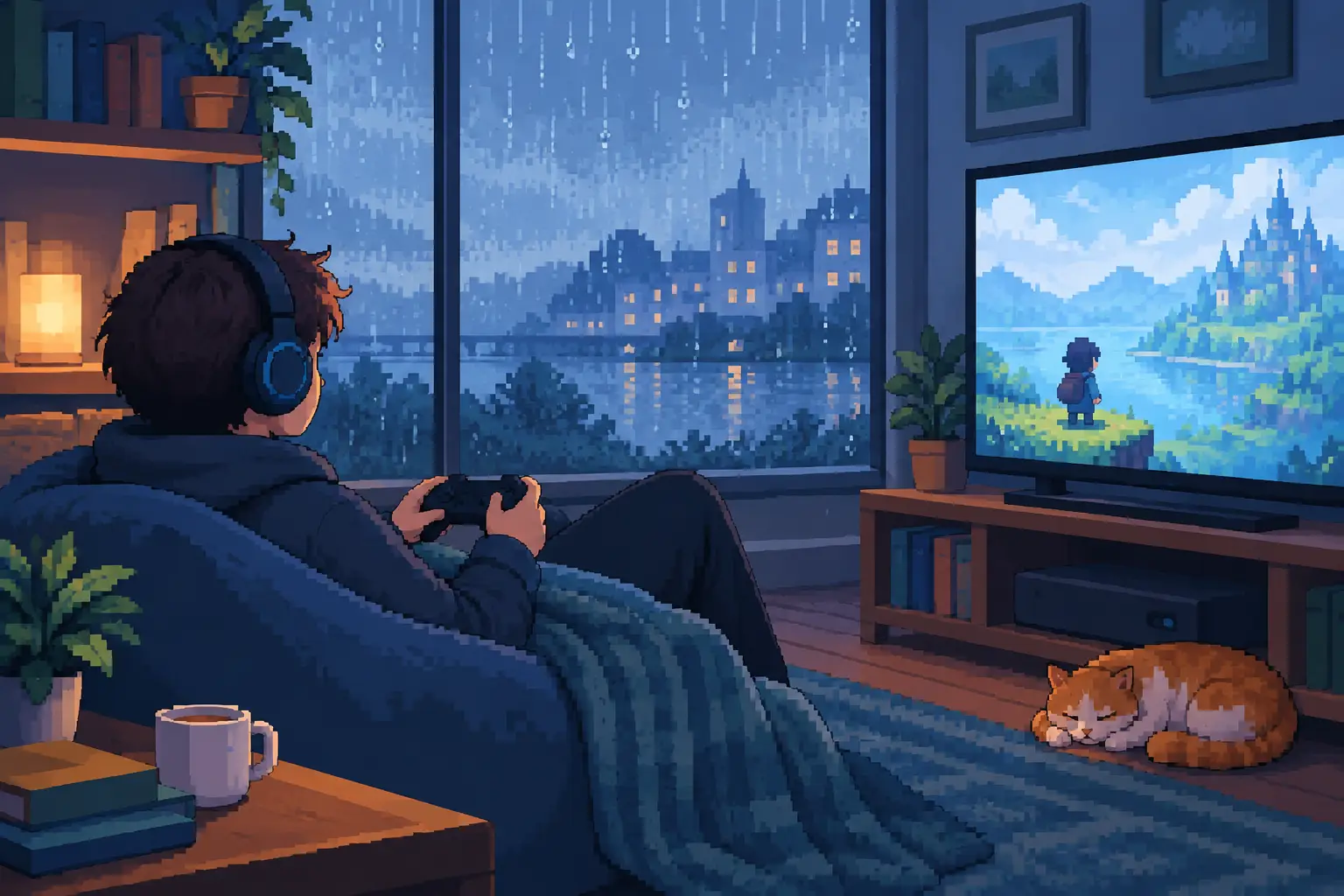
A good quiet game does not punish you for having a full day. Let it be there like rain at the window: something pleasant to return to when you have the space to enjoy it.