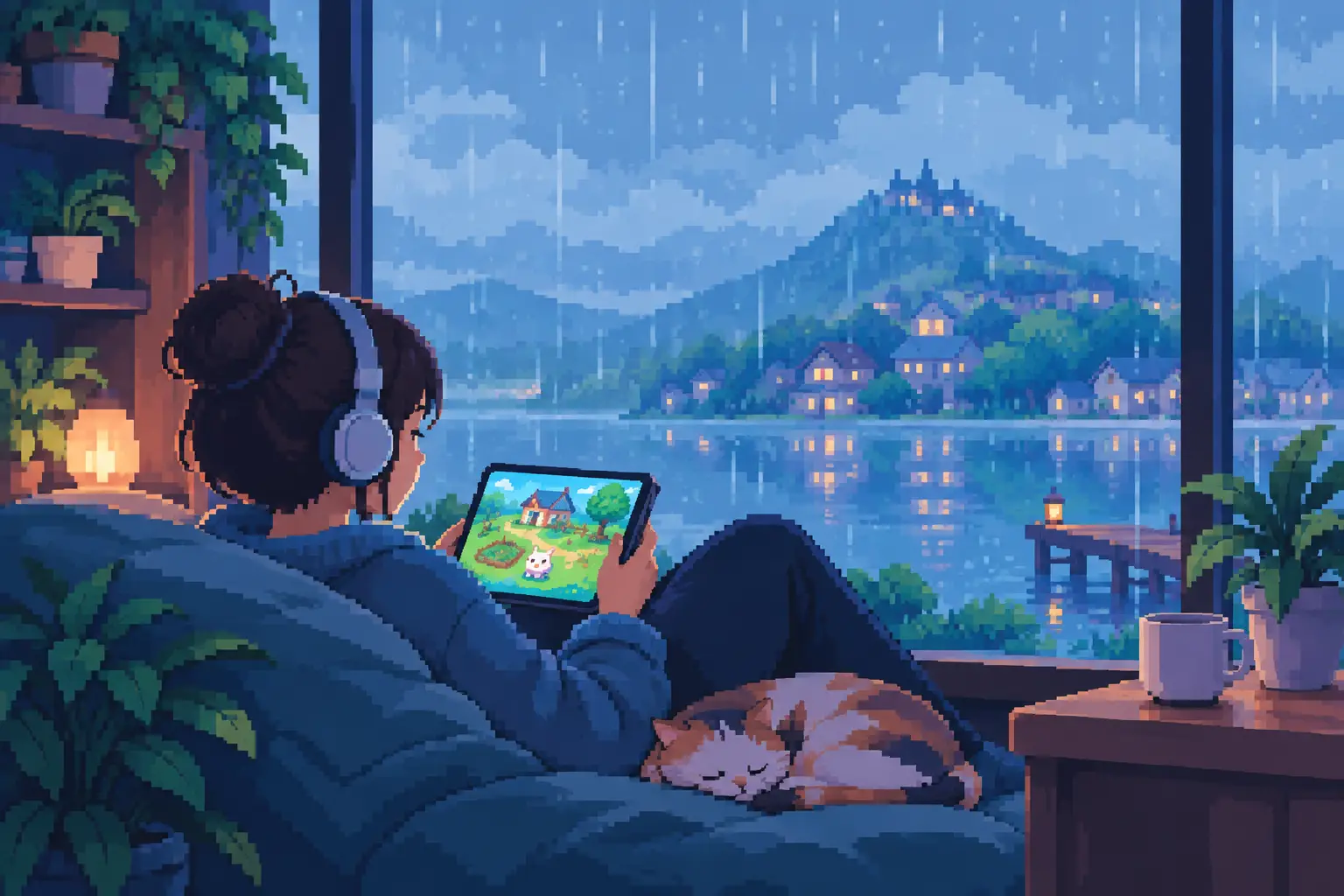
A game does not always need a countdown, a leaderboard, or a difficult boss waiting around the corner. For many players, the most welcome screen is one that asks almost nothing: a soft animation, a small reward, and a few quiet minutes to breathe. Calming game trends are growing from that simple need. They reflect a change in what people want from casual play, especially during crowded commutes, short breaks, and the last hour before sleep.
This is not about removing all purpose from games. The most satisfying calming experiences still offer a reason to return. They simply trade urgency for rhythm. Progress arrives steadily, visuals create a sense of comfort, and the player remains in control of how much attention they want to give.
Why calming game trends feel right now
Daily life is already full of systems competing for attention. Messages arrive, tasks pile up, and even entertainment can begin to feel like another performance. Competitive games can be thrilling, but they often require quick reactions, constant decisions, or the fear of falling behind. There is room for that energy. There is also room for an experience that feels lighter.
Calming games create a small pocket of relief. Their appeal often begins with sensory design: gentle motion, peaceful sound, warm color, or a repeated action that is pleasant to watch. A raindrop moving down a window, a garden slowly filling in, or a tiny world collecting resources can offer the same quiet satisfaction as tidying a desk or watching clouds drift past.
The strongest examples do not treat relaxation as an empty theme. They build it into the pace of play. There is no punishment for stepping away. There is no need to memorize a complicated build order. A player can check in for 30 seconds, make one upgrade, and leave feeling that something progressed rather than something was missed.
The gentle evolution of idle games
Idle games are especially well suited to this shift because their central idea is already patient: numbers rise, resources accumulate, and small choices build over time. Traditionally, though, many incremental games lean into acceleration. They can become dense with currencies, timed events, efficiency calculations, and pressure to optimize every tap.
The newer, calmer approach keeps the satisfying structure while smoothing its sharp edges. Offline rewards mean a break is part of the experience, not a mistake. Upgrades provide a sense of direction without demanding research. Prestige systems can still add long-term depth, but they work best when they feel like a fresh beginning instead of a reset that must be solved perfectly.
That balance matters. A game with no choices at all may be pleasant for a moment but easy to forget. A game with too many choices stops feeling restful. The sweet spot is a clear loop: observe something beautiful, collect a reward, choose a simple improvement, and return whenever it suits you.
Droplet Idle fits this gentler version of incremental play by pairing passive progression with the familiar comfort of rain on glass. Realistic droplets form, merge, and slide in a soothing rhythm, while upgrades and rewards give the experience a quiet sense of momentum.
Progress without the pressure
The best calming idle systems make growth visible. A number increasing is satisfying, but it becomes more meaningful when the screen itself changes with it. More droplets, richer bokeh light, smoother movement, or a fuller scene gives progress a physical feeling. Players do not have to study a chart to understand that their time has added up.
Clear feedback is also more relaxing than constant surprise. When an upgrade says what it will do and the result appears right away, the decision feels easy. That clarity is especially valuable for players opening a game between meetings, while waiting in line, or as part of an evening wind-down. They should not need a tutorial refresh every time they return.
Visual comfort is becoming gameplay
One of the most noticeable calming game trends is the rise of visuals that are designed to be watched, not merely passed through. In many games, animation exists to signal action: an enemy attack, a reward chest, a new objective. In calming games, motion can be the reward itself.
Water is a natural fit because people already associate it with rest. The tiny unpredictability of droplets joining and changing direction makes the screen feel alive, while the repeated movement remains easy to follow. At a smooth frame rate, that rhythm can be quietly mesmerizing rather than distracting. Soft-focus lighting and restrained effects help the scene feel more like an ambient space than an interface demanding clicks.
This does not mean every calming game needs rain, pastel colors, or a sleepy soundtrack. A cozy café, a slow-moving train, an aquarium, or a miniature landscape can create the same effect. What matters is visual consistency. The colors, movement, text, and reward effects should all support the same emotional temperature.
There is a trade-off, however. Too much visual motion can become busy, and overly bright reward bursts can interrupt the calm they are meant to support. Thoughtful design leaves room for the eyes to rest. It lets the player linger without feeling pushed toward the next button.
Short sessions, longer comfort
Calming games are not only for long, quiet evenings. Their flexibility is part of their appeal. A player might open one for a minute while coffee brews, glance at it during a work break, or keep it nearby while listening to a podcast. Unlike games that demand full focus, a peaceful idle experience can meet the player where they are.
That does not make it less substantial. Small sessions can build a lasting ritual when each return feels rewarding. The player recognizes the screen, notices what has changed, and makes one simple choice. Over days and weeks, those moments create a gentle relationship with the game.
For developers, this means respecting the player’s time. Notifications should feel optional rather than urgent. Daily rewards should feel welcoming rather than punitive. Monetization and events need particular care, because aggressive timers can quickly break the sense of safety a calming game has earned. The goal is not to turn relaxation into another checklist.
A healthier definition of engagement
For years, game engagement was often measured by how long someone stayed, how often they returned, and how intensely they interacted. Those measures still matter, but calming games suggest another question: how does a player feel after closing the app?
If they leave more settled than when they arrived, that is meaningful value. It can come from a pleasing animation, a completed upgrade, or simply a few quiet seconds spent watching something move naturally. The experience does not have to claim it will solve stress. Games are not a replacement for rest, support, or professional care when those are needed. But they can offer a small, accessible pause inside an ordinary day.
This is why calm design is more than a visual style. It is a promise about the relationship between the game and the player. The game will not demand perfect performance. It will not turn every absence into a loss. It will offer progress, beauty, and a place to return to at a pace that feels comfortable.
What comes next for calming game trends
The future of this space will likely bring more hybrid experiences: idle progression with ambient scenes, light collecting systems with soothing audio, and deeper customization that never becomes overwhelming. Players may want to choose the weather, the lighting, the soundtrack, or the pace of rewards, shaping a small digital environment that feels personal.
The challenge will be preserving simplicity as features grow. More content is not always more calming. A thoughtful game can offer variety while keeping its core interaction immediately understandable. It should feel inviting on the first visit and familiar on the fiftieth.
A quiet game earns its place not by asking for every spare moment, but by making a few spare moments feel softer.