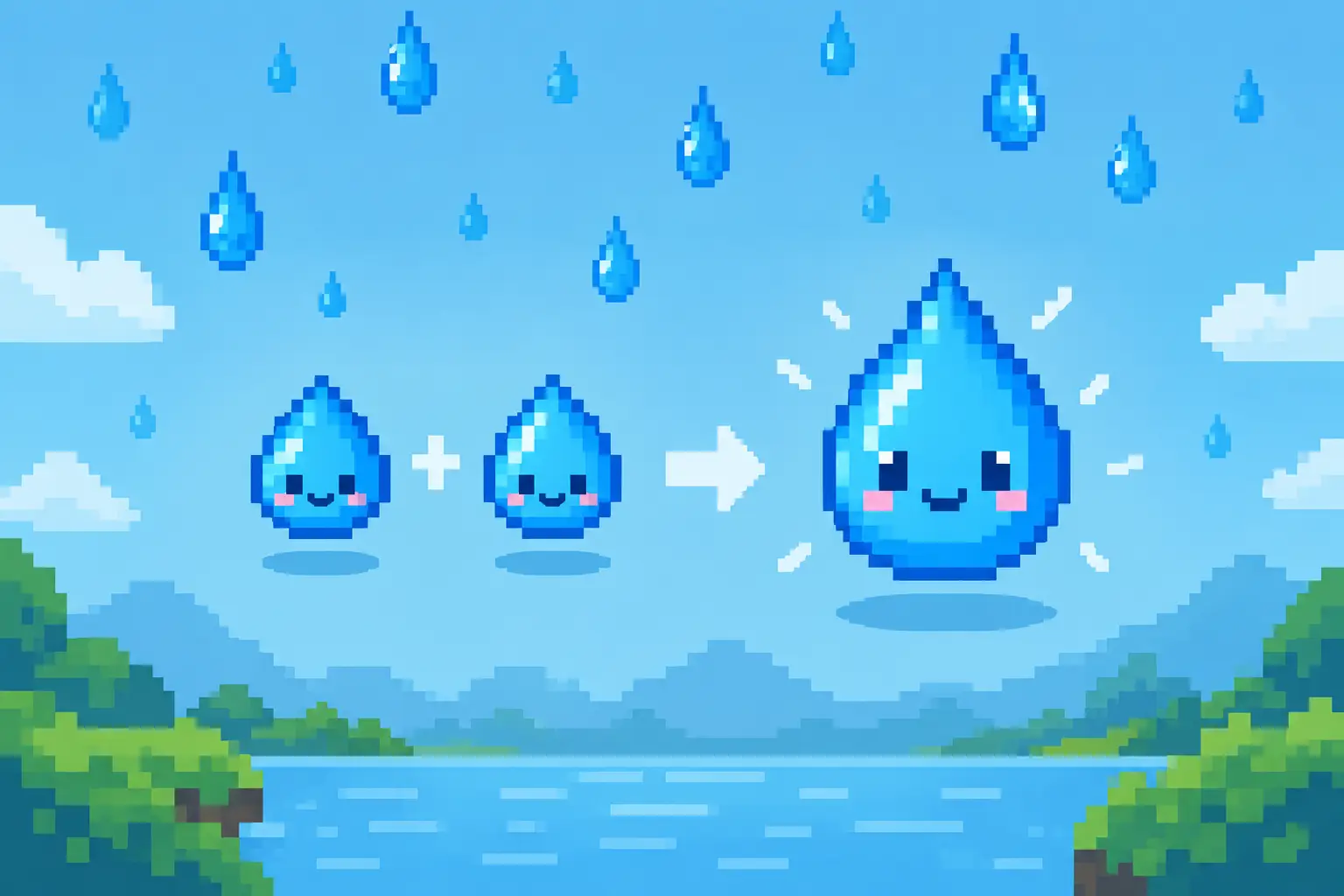
A larger droplet gathering smaller beads of water is one of those tiny visual moments that feels instantly complete. Learning how to merge droplets efficiently adds a satisfying layer of progress without turning your quiet screen into another thing to manage. The goal is not frantic tapping or perfect reactions. It is creating the conditions where drops naturally meet, grow, and reward your patience.
In a relaxing idle game, efficiency should feel almost invisible. A well-tuned droplet board has a soothing rhythm: small drops appear, paths begin to overlap, and a larger drop slowly becomes the center of the scene. You make a few thoughtful choices, then let the motion do what it does best.
What efficient droplet merging really means
Efficiency is not always the same as speed. If you rush to trigger every possible merge, you may interrupt the calm visual flow or spend resources on upgrades that do not help your current stage. A more useful definition is this: efficient merging means getting steady growth from each session while keeping the game restful.
That usually comes from balancing three things: how often droplets appear, how likely they are to meet, and how much value each successful merge creates. When those pieces work together, even a short check-in can leave your screen looking fuller and your progression moving forward.
There is also a pleasant trade-off to remember. A board crowded with tiny droplets can create many quick combinations, while fewer larger droplets can build toward more meaningful growth. Neither approach is wrong. The better choice depends on what your current upgrades reward and how you prefer to watch the water move.
How to merge droplets efficiently without rushing
Start by giving the screen a moment to settle. When droplets first form, it can be tempting to interact immediately. Instead, watch where new drops tend to appear and where existing ones collect. Moisture-like movement has a natural geography: some areas become busy meeting points, while others stay quiet longer.
If your game lets you influence placement or movement, guide droplets toward existing clusters rather than spreading them evenly across the screen. A large drop near a steady source of smaller ones has more opportunities to grow than several isolated medium-sized drops. Think of it as preserving momentum. Each merge should make the next one more likely.
Avoid breaking up a promising cluster just to chase a small, immediate reward elsewhere. The visual payoff of a chain merge often comes from allowing several nearby droplets to remain in motion until they find each other. A little patience can produce a more satisfying result than constant interference.
Watch for natural merge lanes
Most droplet scenes develop soft pathways. Gravity, screen angle, or the movement pattern of the game may pull drops through familiar routes. Look for the areas where droplets repeatedly slide, pause, or gather.
Once you notice those lanes, favor upgrades or interactions that strengthen them. More activity in a productive lane generally creates more merge chances than trying to make every corner of the screen equally active. This also keeps the display visually calm, with a few graceful streams rather than scattered, competing motion.
Build upgrades around your current bottleneck
Upgrades are where an idle experience gains structure, but they work best when chosen with a light touch. Do not buy every available improvement simply because it is available. Pause and ask what is actually slowing your droplets down.
If the screen often feels empty, prioritize droplet generation. More drops mean more chances for contact, and a quiet board cannot sustain many merges no matter how valuable each combination becomes. If the screen is active but droplets rarely connect, movement, attraction, or merge-related improvements may offer more value. When merges are already happening regularly, increase the reward or growth gained from them.
A simple order can help when you are deciding where to spend:
- Increase generation when there are too few droplets to create a steady rhythm.
- Improve connection or movement when drops appear but remain separated.
- Raise merge value when combinations are frequent but progress feels slow.
- Save for larger multipliers when a major milestone is close and your current gains are stable.
This approach prevents the common idle-game habit of investing only in the upgrade with the biggest number. The best upgrade is usually the one that removes the current bottleneck. A modest boost to droplet frequency can be more valuable than a costly reward multiplier if there are not enough merges happening to benefit from it.
Let offline progress do some of the work
A calm merging strategy does not end when you close the app. Offline rewards are part of the rhythm, especially for players who want a game that fits between errands, work breaks, or an evening wind-down routine.
Before stepping away, spend a moment setting up the board and using resources where they will continue helping passively. Generation and long-term production upgrades are often especially comfortable choices before a longer break because they support progress without requiring your attention. When you return, collect what has accumulated, make one or two clear upgrade decisions, and enjoy the renewed movement.
This is one reason a relaxed game such as Droplet Idle can feel rewarding without demanding a schedule. You do not need to be present for every merge. Your role is to shape the conditions, then return when you want another small moment of visual satisfaction.
Know when to use boosts and special actions
Temporary boosts can make a screen feel wonderfully alive, but using them the moment they become available is not always the most efficient choice. They tend to feel more valuable when the board already has enough activity to amplify.
For example, use a short-lived production boost after you have improved droplet generation or when several drops are gathering in a productive area. If a special action helps droplets combine, wait until there is a real cluster to work with. Spending a powerful effect on an almost-empty screen may create a quick flash of progress, but it rarely creates the same lasting momentum.
The gentler option is often the smarter one: save a boost until it supports a moment that is already forming. This keeps special actions feeling like a satisfying accent to the scene, not a chore you must optimize every few minutes.
Common habits that slow down merging
The first is overcorrecting. Constantly moving attention from one tiny drop to another can prevent natural clusters from developing. Give promising areas enough time to become meaningful.
The second is ignoring balance between upgrades. An extremely high spawn rate can be less helpful if droplets cannot meet effectively. On the other hand, excellent merge rewards mean little if new droplets arrive too slowly. Revisit your setup after a few sessions and adjust one layer at a time.
The third is treating prestige or reset systems as a loss. In many idle games, a reset is a quiet exchange: you leave behind some short-term progress in return for a stronger foundation. If your gains have slowed despite sensible upgrades, a prestige-style step may be the cleanest way to make future droplets grow faster. It depends on the game’s specific rewards, so compare the permanent benefit with the time needed to rebuild.
Create a returning ritual, not a routine
The most enjoyable way to play is often a brief, unhurried check-in. Open the game, watch the droplets for a few seconds, collect passive rewards, choose the upgrade that eases your current bottleneck, and let the screen breathe again. Five focused minutes can be plenty.
Over time, you will recognize the patterns that suit your board: the places where drops naturally gather, the upgrades that keep motion flowing, and the moments when waiting is more rewarding than acting. Let each merge be a small reminder that progress does not always need pressure. Sometimes it only needs a little space to come together.