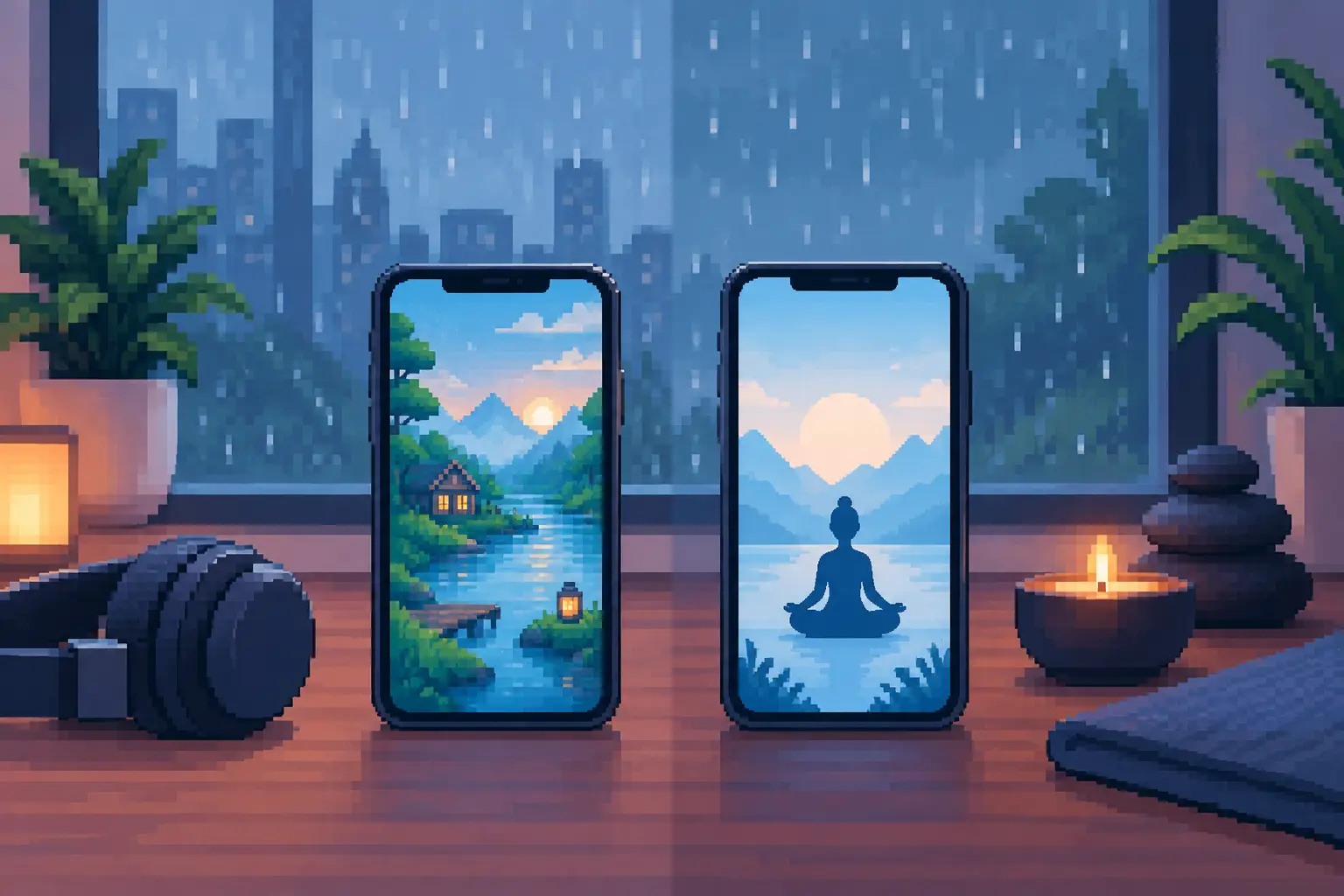
A five-minute break can feel very different depending on what your mind needs. With mobile relaxation games vs meditation apps, the better choice is not always the quietest-looking screen. Sometimes you want guided stillness. Other times, watching rain-like droplets merge and drift while small rewards gather in the background is exactly enough to help the day loosen its grip.
Both can support a calmer routine, but they ask for different kinds of attention. Meditation apps are designed to help you practice awareness, breathing, and rest. Relaxation games offer a gentle place for your attention to land, often with visual rhythm, light interaction, and the satisfying feeling that something is gradually growing.
Mobile Relaxation Games vs Meditation Apps: The Core Difference
Meditation apps generally invite you to turn inward. A voice may guide your breath, lead a body scan, or encourage you to notice thoughts without following them. The experience can be deeply restorative, especially when you have enough privacy, time, and willingness to sit with what is on your mind.
Mobile relaxation games turn the focus outward in a softer way. They give the mind a simple, low-stakes pattern to follow: droplets collect, numbers rise, an upgrade quietly improves what happens next. There is no need to perform calm correctly. You can simply watch, tap when you feel like it, and let the soothing rhythm do some of the work.
That difference matters after a busy meeting, a crowded commute, or an evening when formal meditation feels like another task on the list. A calming game can be a bridge between mental noise and genuine rest. It occupies just enough attention to make room from the day without demanding intense concentration.
When a Meditation App Is the Better Fit
A meditation app is often the stronger choice when you want to build a deliberate habit. Guided sessions can teach useful skills over time, from slowing the breath to recognizing spiraling thoughts before they gather speed. For people who enjoy structure, a scheduled practice, reminders, and themed programs can make calm feel more accessible.
It may also help when you want a clear boundary around your break. Pressing play on a 10-minute session creates a beginning, middle, and end. You are less likely to keep browsing, answering messages, or wondering what to do next.
Still, meditation is not effortless for everyone. Silence can feel uncomfortable when your mind is restless. A guided voice may not match your mood, and the idea of sitting still can create pressure when you are already depleted. That does not mean meditation is failing. It simply means the format may not be right for that particular moment.
Meditation apps are also not a substitute for professional mental health support. If stress, anxiety, sleep trouble, or low mood feels persistent or overwhelming, speaking with a qualified healthcare professional can offer the support an app cannot provide.
When a Relaxation Game Feels More Natural
Relaxation games work beautifully in the small spaces where a full practice would feel unrealistic. Think of the minutes while dinner cooks, the pause before sleep, or the stretch of time after closing a demanding work tab. You do not need headphones, a perfectly quiet room, or the energy to follow instructions.
The best calming games avoid the pressure common in many mobile titles. There are no leaderboards to chase, no punishing timers, and no sense that you have fallen behind. Instead, their appeal comes from a soothing visual loop and lightweight progress that continues at an unhurried pace.
This is where idle mechanics can feel surprisingly comforting. Offline rewards mean stepping away is part of the experience, not a mistake. Upgrades and prestige systems give returning players a quiet sense of momentum, while the core activity remains simple enough to enjoy with a tired mind.
A game such as Droplet Idle leans into that balance. Realistic droplets form, merge, and slide through dreamy bokeh light at a smooth 60 frames per second, creating the familiar comfort of rain on a window. Beneath the mesmerizing visuals, passive rewards and gentle upgrades provide enough structure to make each return feel satisfying, never urgent.
Attention: Guided, Absorbed, or Gently Distracted?
The most useful question is not which option is universally more relaxing. Ask what kind of attention you have available.
Meditation asks you to notice the present directly. It may ask you to observe a tight chest, a racing thought, or the feeling of your feet against the floor. This is valuable work, but it can feel demanding when your nervous system is already overstimulated.
A relaxation game gives attention a soft object. Watching water move, collecting an idle reward, or choosing one simple upgrade can create a mild state of absorption. You are not avoiding every thought. You are giving your brain a predictable, pleasant signal that it can stop scanning for the next problem.
There is a trade-off. A game can become less relaxing if its design pushes constant checking, complicated optimization, ads, or fear of missing out. Likewise, meditation can feel unhelpful if you choose a session that is too long, too serious, or poorly timed. The right experience should leave you feeling lighter, not more behind.
Choose by Moment, Not by Identity
You do not have to decide whether you are “a meditation person” or “a game person.” Many people use both, depending on the hour.
Use meditation when you want a purposeful pause, when you have a few uninterrupted minutes, or when a guided voice helps you settle. Choose a mobile relaxation game when you want low-effort comfort, visual pleasure, and a break that feels easy to begin. If you are winding down after work, ambient animation and passive play may be more inviting than instructions. If you are preparing for sleep and want to leave your phone behind soon, a short guided breathing session may be the better final step.
It can also help to set a gentle intention before opening either one. You might decide, “I am taking ten minutes to reset,” rather than reaching for your phone with no destination. The tool stays simple, but your break becomes more intentional.
Build a Calmer Phone Routine
Your phone does not have to be a source of more noise. A few small choices can make it feel more supportive. Keep your calming app or game easy to reach, turn off notifications that interrupt the experience, and avoid pairing your reset with doomscrolling. The goal is not perfect discipline. It is making the peaceful option the easiest option when your energy is low.
Try matching the experience to the shape of your day. A short meditation can create a clean start in the morning. A few minutes with a soothing idle game can soften the transition out of work mode. In the evening, choose whichever helps your shoulders drop rather than whichever promises the most productivity.
The most calming ritual is often the one you will actually return to. Whether that means a quiet guided breath or a screen filled with slowly gathering droplets, let your break be small, beautiful, and free from pressure.