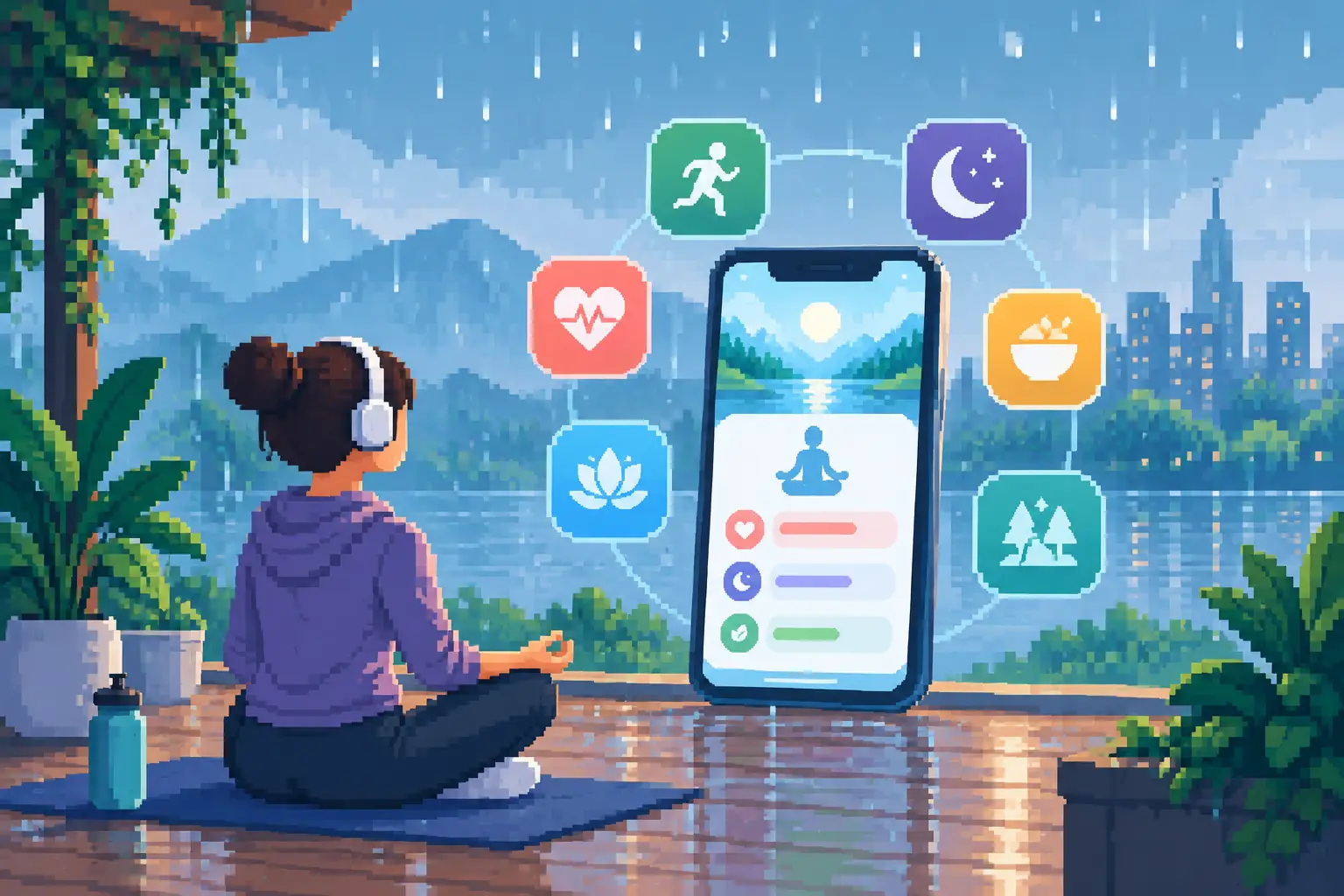
A phone screen can become a small place to exhale. After a crowded commute, between meetings, or during the quiet minutes before sleep, more players are choosing games that soften the pace rather than raise their heart rate. The most meaningful trends in wellness gaming apps reflect that shift: play is becoming less about winning loudly and more about finding a soothing rhythm that feels good to return to.
This does not mean wellness games are abandoning game design. The strongest experiences still give players satisfying progress, small surprises, and reasons to check back. The difference is in how those rewards are delivered. Instead of urgency, they offer gentle momentum. Instead of demanding attention, they make space for it.
1. Sensory comfort is becoming a core game mechanic
Visual atmosphere is no longer just decoration. In wellness-focused games, it can be the reason a player opens the app at all. Soft lighting, natural movement, warm color palettes, rain, water, clouds, gardens, and other familiar scenes help create a feeling of distance from a busy day.
The best examples give those visuals room to breathe. A screen crowded with timers, pop-ups, and flashing rewards can undermine an otherwise calming concept. A slower scene, by contrast, lets the player notice a droplet gathering weight, leaves moving in a breeze, or a subtle glow changing over time.
Sound matters too, although it depends on where and when someone plays. Gentle ambient audio can deepen a wind-down routine, while optional or minimal sound works better for public spaces, shared rooms, and short work breaks. Player control is part of the comfort. Volume settings, haptics that can be turned off, and reduced-motion options make an experience more welcoming instead of prescriptive.
2. Gentle progression is replacing pressure-heavy loops
People still enjoy seeing numbers rise. Upgrades, collection goals, milestones, offline rewards, and prestige systems remain deeply satisfying because they give a calm activity shape. The emerging difference is that wellness gaming apps are using these systems without making players feel behind.
A relaxing progression loop says, “Something pleasant happened while you were away.” A stressful one says, “You missed your chance.” That contrast changes the emotional texture of the game.
Gentle progression often includes rewards that accumulate at a comfortable pace, upgrades that are easy to understand, and milestones that feel celebratory rather than mandatory. A player might improve a visual effect, increase passive earnings, or open a new peaceful environment. The system gives them a sense of movement without turning their downtime into another task list.
This approach especially suits idle games. Passive play can be genuinely rewarding when the player gets to watch a small system grow, then leave without guilt. In a game such as Droplet Idle, the quiet satisfaction comes from both the realistic motion of water and the gradual build of upgrades beneath it.
3. Short sessions are being designed as complete moments
Not every game needs an hour of uninterrupted focus. For many adults, five peaceful minutes can be more valuable than a long session that requires concentration they do not have to spare.
That reality is shaping wellness game design. Players want to open an app, understand what is happening immediately, enjoy a small moment of progress, and close it without losing their place. A good session can be as simple as collecting passive rewards, choosing one upgrade, or watching a calming animation unfold.
Short-session design does not have to mean shallow design. Over days and weeks, a game can reveal new layers, visual variations, and meaningful goals. The key is that every visit feels complete on its own. There is no need to memorize complicated controls or chase a rapidly expiring event just to feel included.
4. Low-stakes choice is more appealing than constant optimization
Traditional mobile games often ask players to make efficient choices under pressure: pick the strongest build, spend limited energy, beat a countdown, keep up with a leaderboard. That can be fun in the right mood. It is not always what someone wants at the end of a demanding day.
Wellness-oriented games are making room for choices with softer consequences. Players may select a visual theme, choose which area to nurture next, or decide when to use a bonus, but the game does not punish them for following instinct. The goal is to preserve agency without turning every tap into a test.
There is a trade-off. If a game removes every decision, it can feel more like a screensaver than an experience. If it adds too many systems, it loses the clarity that made it calming. The sweet spot is light interaction with visible payoff: a choice that changes the scene, advances a collection, or makes the next return a little more rewarding.
5. The trends in wellness gaming apps favor returnable rituals
A wellness app earns a place in someone’s routine when it fits naturally around an existing habit. That could be opening it with morning coffee, checking in after lunch, or letting the visuals play while preparing for bed. The game becomes a familiar pause, not another obligation.
Design details support this ritual feeling. Consistent visual language makes the app instantly recognizable. Clear offline rewards offer a pleasant reason to return. Slow-changing environments create a sense of continuity, as though the player is visiting a small world that has been quietly evolving.
Ritual is different from compulsion. A healthy return loop should feel optional and restorative. Notifications, if used at all, should be restrained and useful rather than insistent. The player should feel that the game is available when they need a calm moment, not demanding one from them.
6. Accessibility is moving from a setting to a design principle
A soothing experience is not soothing for everyone by default. Fast flashes, intense contrast, tiny text, abrupt sound, and relentless motion can make a game difficult or unpleasant for some players. More wellness-minded developers are considering these needs from the first screen onward.
Readable type, generous spacing, distinct controls, understandable icons, and adjustable audio are practical signs of care. So are options that reduce animation, limit visual effects, or make color differences easier to interpret. These choices improve comfort for many players, not only those who actively seek accessibility settings.
There is also a language component. Instructions should be clear and kind. A relaxed game should not make someone feel confused by vague menus or overly clever labels. When the interface is easy to read, players can spend their attention on the atmosphere and the quiet satisfaction of progress.
7. Wellness claims are becoming more grounded
Players are increasingly alert to apps that promise more than they can deliver. A game can support a calming break, offer pleasant sensory focus, and provide low-effort entertainment. It should not present itself as a substitute for mental health care or claim to solve stress for every person.
That honesty makes the experience stronger. Some players find repetitive visual motion deeply relaxing; others prefer a little more structure. Some enjoy ambient sound; others need silence. Wellness gaming works best when it offers a flexible space rather than a one-size-fits-all prescription.
For developers, this means describing benefits in human terms. Focus on what a player can actually experience: a quieter pause, a satisfying visual loop, a gentle sense of progress, or a few minutes away from noise. Those are modest promises, but they can make a real difference in the rhythm of an ordinary day.
What players should look for next
The next wave of wellness games will likely feel more personal without becoming more demanding. Expect better control over sound and motion, more atmospheric variety, and progression systems that respect time away from the screen. The most memorable apps will understand that calm is not the absence of play. It is play shaped around the player’s energy.
When choosing a wellness game, pay attention to how you feel after a few minutes. If you leave more hurried, more pressured, or more distracted than before, the loop may not suit the moment. The right game should leave a little more room in your mind than it found.